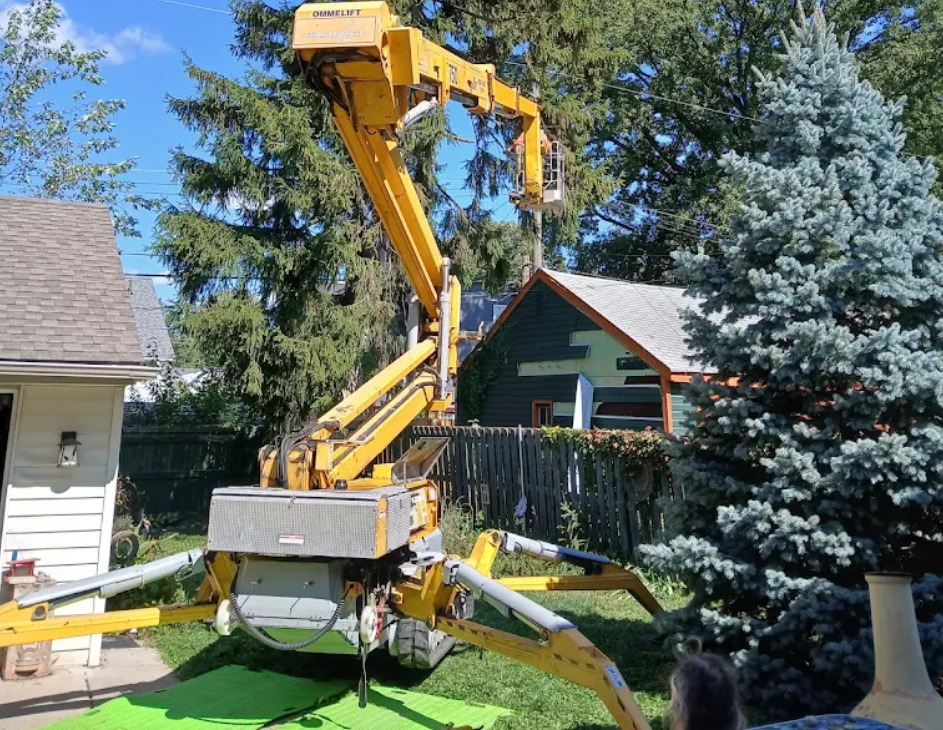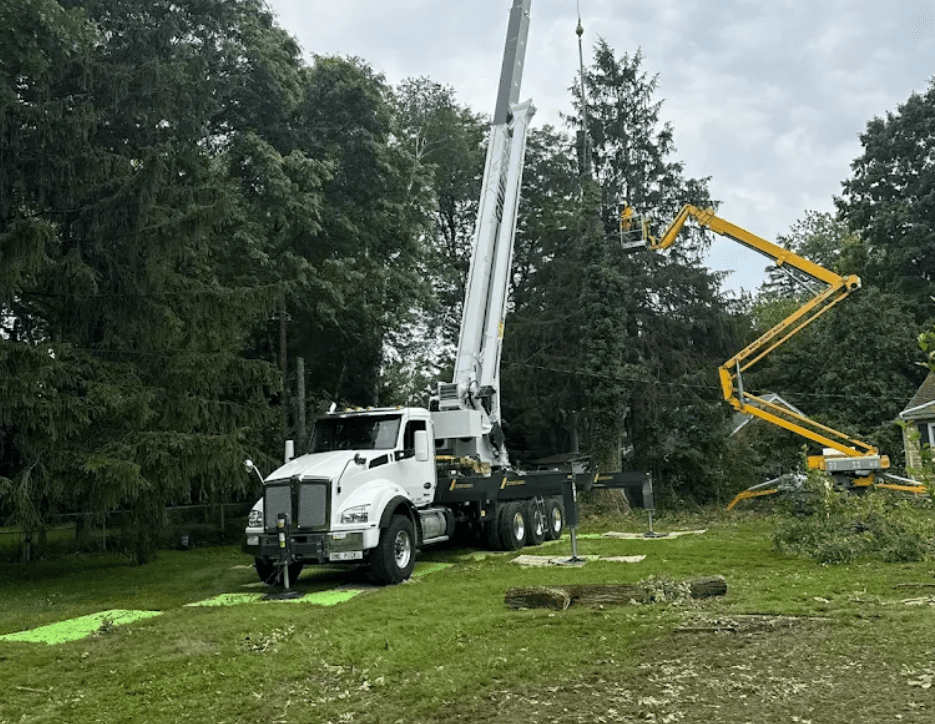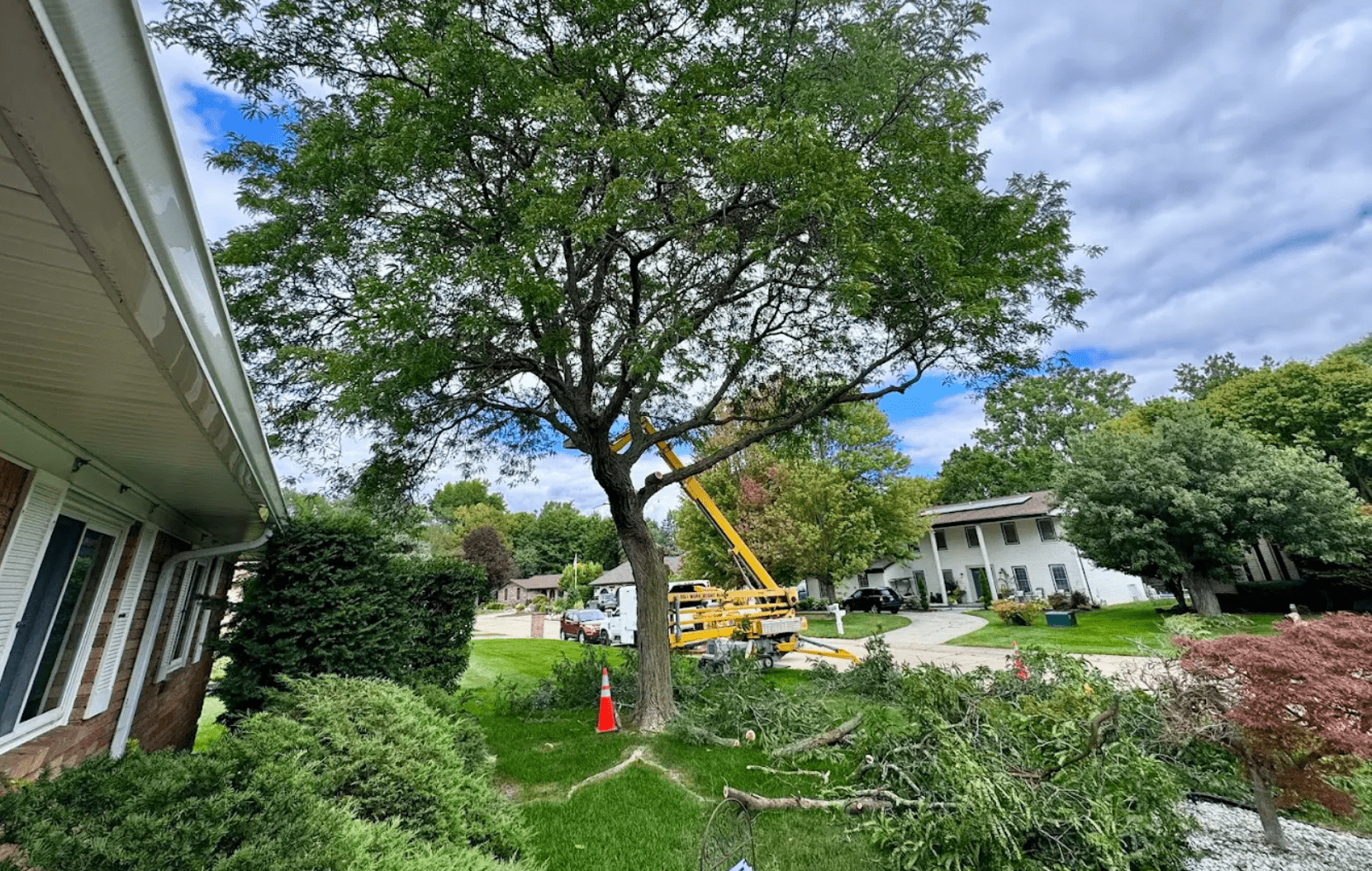
Tree trimming is essential for maintaining safety, tree health, and property value. But should you do it yourself or hire a professional? Here’s the breakdown:
- DIY Costs: Expect to spend around $560–$600 on tools like chainsaws, ladders, and safety gear. Renting equipment or handling debris removal adds more. It’s time-consuming, risky, and mistakes can lead to expensive tree damage or accidents.
- Professional Costs: On average, professional services cost about $460, with prices ranging from $80 to $1,800 depending on tree size. Professionals offer expertise, safety, insurance, and efficient service, making them a safer choice for larger or complex jobs.
- Risks: DIY tree trimming can lead to injuries, property damage, or poor pruning, which may harm the tree. Professionals handle these risks with proper training and equipment.
Quick Takeaway: DIY is suitable for small, manageable trees under 20 feet. For larger trees or hazardous situations, hiring professionals is safer and often more cost-effective in the long run.
Quick Comparison
| Criteria | DIY Tree Trimming | Professional Tree Trimming |
|---|---|---|
| Cost | $560–$600 for tools, plus extras | $80–$1,800 depending on tree size |
| Time | Several hours to days | 4–8 hours (on average) |
| Safety | High risk without training | Professionals are insured and trained |
| Tree Size | Best for small trees (under 20 ft) | Suitable for all sizes |
| Long-Term Impact | Risk of tree damage or poor health | Promotes tree health and safety |
| Debris Removal | Additional cost or effort | Usually included in service |
If you’re unsure, prioritize safety and long-term results by consulting a professional.
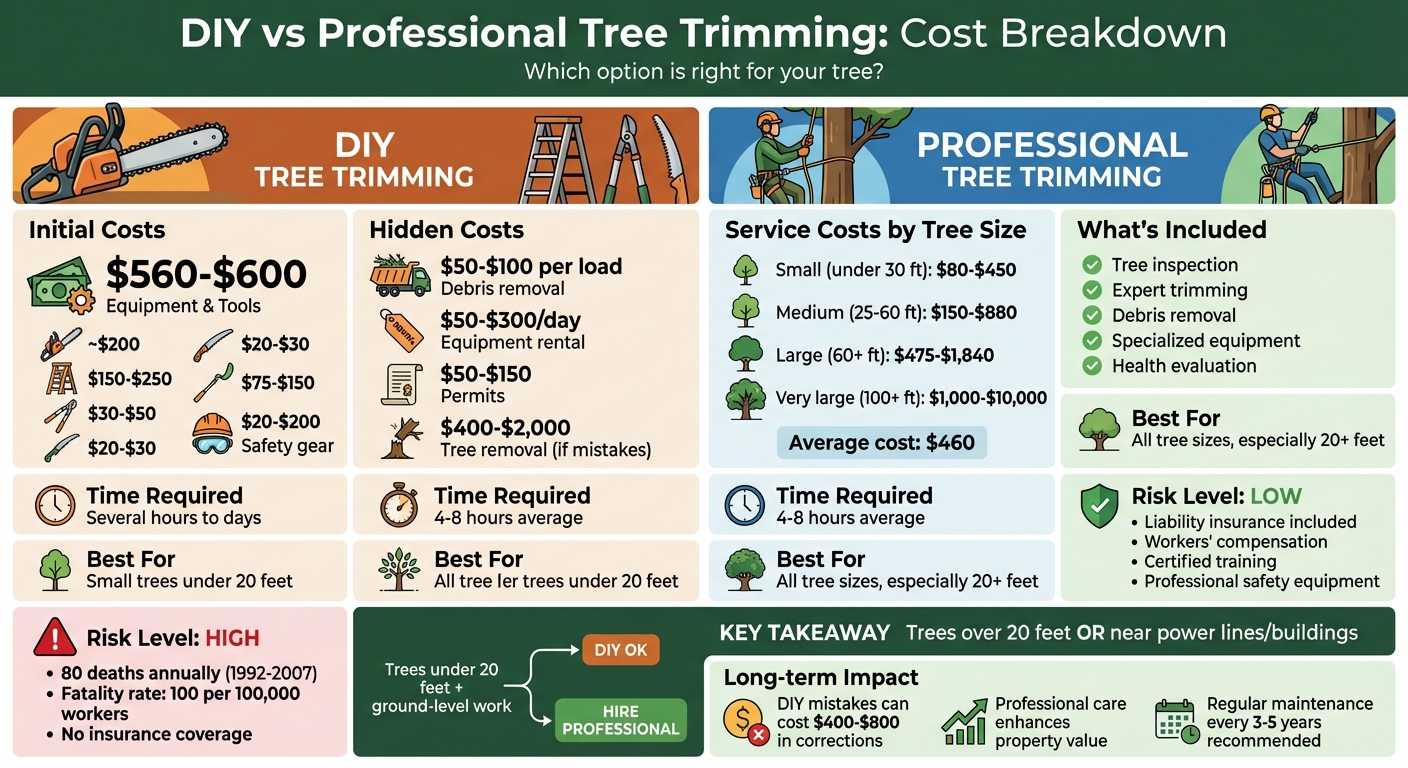
DIY vs Professional Tree Trimming Cost Comparison Chart
DIY Tree Trimming: What You’ll Pay
Equipment and Tool Costs
If you’re tackling tree trimming on your own, expect to invest in tools and gear. Basic equipment includes an entry-level chainsaw (around $200), a ladder (ranging from $150 to $250), loppers ($30 to $50), a pruning saw ($20 to $30), and a pole trimmer ($75 to $150). Don’t forget safety essentials like gloves and safety glasses, which add another $20 to $40. For those who prefer not to purchase everything, renting specialized tools – such as high-reach ladders or bucket trucks – can cost between $50 and $300 per day.
Long-term maintenance also factors in: sharpening chainsaw blades, oiling parts, and handling occasional repairs will add to your expenses. If you want extra protection, consider harnesses, helmets, and protective clothing, which can bring your safety gear costs up to $200.
Time and Labor Requirements
DIY tree trimming isn’t just about tools – it’s also a major time commitment. You’ll need several hours to research techniques, set up equipment, trim branches, and clean up the debris. The work itself can be grueling, involving heavy lifting, chainsaw operation, and climbing ladders.
For comparison, professionals can trim a 25-foot tree in about four hours, including inspection, trimming, and cleanup. Without access to advanced tools like bucket trucks or industrial wood chippers, your DIY effort will likely take much longer.
Hidden Costs and Risks
DIY projects often come with unexpected expenses. For instance, debris removal can cost $50 to $100 per load if you can’t handle it yourself. Some areas require permits for trimming large or historic trees, which could add $50 to $150 to your costs.
Working near power lines introduces serious risks, especially if you don’t contact your utility company – many of which handle trimming near lines at no charge. Mistakes in pruning can harm or even kill your tree, potentially leading to removal costs of $400 to $2,000. And if a branch damages your roof, car, or a neighbor’s property, you could face thousands in repair bills – without liability insurance to cover the damage.
The dangers are real: between 1992 and 2007, an average of 80 people in the U.S. died annually from tree care accidents, and the fatality rate for tree trimmers is about 100 per 100,000 workers.
"You can’t safely remove a 60-foot oak with a $200 chainsaw and a pickup truck. When I see crews working without proper rigging equipment or climbing gear, I know it’s only a matter of time before someone gets hurt or property gets damaged."
- Jim York, Foreman/Arborist, A-AAA Tree Service
Next, we’ll explore what it costs to hire professional tree trimming services.
sbb-itb-a61c528
The Cost of Tree Cutting Services vs. DIY: Is It Worth It?
Professional Tree Trimming: What You’ll Pay
When you opt for professional tree trimming services, you’re not just paying for the job itself – you’re investing in expertise, safety, and convenience that DIY methods simply can’t match.
Service Pricing by Tree Size
The cost of professional tree trimming largely depends on the size of your tree. Here’s a general breakdown:
- Small trees (under 30 feet): $80 to $450
- Medium trees (25 to 60 feet): $150 to $880
- Large trees (over 60 feet): $475 to $1,840
- Very large trees (100+ feet): $1,000 to $10,000
On average, most homeowners spend around $460 for a typical job. However, regional differences can push costs anywhere from $200 to $600.
Additional factors can raise the price. For example, if your tree is in a tricky location where bucket trucks can’t be used, labor costs may rise by 25% to 50% since the crew will need to climb manually. Trees near power lines, buildings, or fences also require extra care, potentially adding another 20% to 50% to your bill.
If your tree is diseased or infested with pests, additional treatments may cost $30 to $300. Some companies offer discounts for trimming multiple trees, often $100 off per additional tree. Understanding these variables helps you see where your money goes.
What’s Included in Professional Services
Hiring professionals means you’re paying for more than just branch cutting. These services typically include:
- Tree inspection: Experts assess the tree’s health and structural stability.
- Trimming and debris removal: Crews handle the cleanup, saving you time and effort.
- Specialized equipment: Tools like chainsaws, bucket trucks, and rigging systems ensure efficiency and safety.
Certified arborists often include health evaluations during their visit, identifying diseases, pest issues, or hidden decay that untrained eyes might miss. If you need a more detailed consultation or risk assessment, expect to pay $150 to $250 per hour.
"Hiring a certified arborist to maintain and care for your trees ensures long life, continued curb appeal, and value-enhancing benefits."
- Ryan Statham, District Manager and ISA Certified Arborist, The Davey Tree Expert Company
Safety and Insurance Protection
One of the biggest advantages of professional tree services is the built-in insurance coverage. These companies carry both liability insurance and workers’ compensation, which protects you from financial responsibility if a worker is injured or property is damaged during the job. Without this coverage, you could be on the hook for medical bills or repair costs.
Professionals also rely on top-tier safety gear – harnesses, helmets, ropes, and rigging systems – to handle dangerous tasks like trimming at heights or lowering large branches. They’re trained to spot hidden risks, such as internal decay or root damage, that could lead to unexpected tree failure.
Before hiring, confirm that the company has proper insurance and ISA certification. If your tree’s branches are touching power lines, contact your utility provider first; many offer free trimming services to maintain safety around the grid.
Long-Term Cost Comparison
Effects on Tree Health and Property Value
While DIY tree trimming might seem like a money-saver, it can backfire if done incorrectly. Mistakes such as cutting too much or making improper cuts can stress your trees, leaving them vulnerable to diseases and pests. Tony Padgett, a Certified Arborist at Panorama Tree Care, explains:
"Improperly trimming your tree can cause long-term damage… When you cut too much or do it incorrectly, it can stress the tree out, making it more vulnerable to disease, pests, and other issues."
Common DIY errors like topping or leaving stubs can prevent trees from healing properly, leading to decay. This often results in costly fixes like tree removal, which ranges from $200 to $2,000, or stump grinding, which costs between $150 and $450. These expenses can quickly erase any initial savings from doing it yourself.
On the other hand, professional tree care ensures your trees stay healthy and visually appealing, which can enhance your property’s curb appeal. Poorly maintained or diseased trees, however, can lower property value and become liabilities during assessments. Long-term, these issues can also lead to higher maintenance costs.
Ongoing Maintenance Costs
Regular professional trimming – recommended every 3–5 years for mature trees or 2–3 years for younger ones – helps spot potential problems early. Addressing issues proactively can prevent expensive repairs, which typically cost an extra $50 to $250.
If DIY trimming goes wrong, corrective services can cost between $400 and $800. Worse, trees weakened by improper care can become diseased or infested with pests, driving up professional service costs by 25% to 50%. As RealGreen by WorkWave points out:
"The cost of solving these two problems [decay and pest infestation] will be much higher than simply removing the tree when you first notice the signs."
These ongoing costs make a strong case for the value of professional tree services, both for maintaining tree health and avoiding costly mistakes down the road.
DIY vs Professional: Which Should You Choose?
When deciding between handling tree trimming yourself or hiring a professional, the right choice often depends on factors like the size of the tree, potential safety hazards, and your skill level. Making the right call can save you money and, more importantly, prevent injuries. Let’s break down when DIY trimming is a good idea and when you’re better off calling in the experts.
When DIY Is the Right Choice
If you’re dealing with smaller trees – those under 15 to 20 feet tall – DIY trimming can be a practical and cost-effective option. Tasks like removing dead twigs or trimming low-hanging branches are manageable for homeowners with basic tools and some experience. The key is to stick to work that can be done safely from the ground or a stable, short ladder.
Ryan Statham, an ISA Certified Arborist and District Manager at The Davey Tree Expert Company, offers this advice:
"If you would have to use a ladder to reach and remove tree limbs, or cut over your head, that tree is too big for you to remove safely".
In short, if the job requires climbing or working overhead, it’s best to leave it to the professionals. Ground-level work is not only safer but also more manageable for non-experts.
When Professional Services Are Worth Paying For
For trees taller than 20 to 25 feet, hiring a professional is the safer and smarter choice. Tree care can be dangerous – between 1992 and 2007, an average of 80 people in the U.S. died each year from tree care accidents, often due to falls, electrocutions, or being struck by branches. These risks highlight why professionals, equipped with the right tools and training, are essential for larger or more complex jobs.
Certain situations, like trees near power lines, buildings, or fences, demand extra caution. If branches are in contact with power lines, your first call should be to your local utility company, as many offer free trimming services to maintain grid safety. Additionally, trees that are diseased, decaying, or damaged by storms can be unpredictable and dangerous to handle without expert help. Professional tree services not only bring the necessary expertise but also carry liability insurance and workers’ compensation, protecting you from financial responsibility in case of accidents [30,31].
For large trees over 60 feet tall, professional trimming typically costs between $300 and $1,835. This price covers everything from specialized equipment to advanced safety measures and debris removal. While the upfront cost may seem high, the long-term benefits – like healthier trees and reduced property risks – make it a worthwhile investment. Plus, as discussed earlier, professional maintenance can save you money over time by preventing more expensive issues down the road.
Conclusion
When deciding between DIY and professional tree trimming, it’s essential to weigh the balance between upfront costs and long-term benefits. On average, a basic set of DIY tools costs around $560, while professional trimming services hover near $460. Surprisingly, professionals often come out cheaper in the short term, but their value extends well beyond initial savings.
The expertise and safety provided by professionals, like those at Viking Tree & Stump, cannot be overstated. Tree care is inherently risky – fatal accidents in this field are a stark reminder of the dangers involved. Professionals bring liability insurance, specialized tools such as bucket trucks, and the efficiency to complete complex tasks in a fraction of the time it might take an amateur. Plus, they do it all while safeguarding your property and personal safety.
From a financial perspective, professional care is a smarter long-term investment. DIY mistakes can harm or even kill a tree, potentially leading to removal costs ranging from $200 to $5,000. Certified arborists not only prevent these costly errors but also identify issues like diseases or pests before they escalate. As Ryan Statham, District Manager at The Davey Tree Expert Company, explains:
"Hiring a certified arborist to maintain and care for your trees ensures long life, continued curb appeal, and value-enhancing benefits".
Choosing professional tree care is about more than convenience – it’s about protecting your trees, your property, and your peace of mind.
FAQs
What should I consider when choosing between DIY and professional tree trimming?
When considering whether to tackle tree trimming yourself or hire a professional, there are a few important factors to keep in mind. Start by looking at the tree’s size and condition. If the tree is over 30 feet tall or has dangerous branches, it’s best to leave the job to professionals. These situations often require specialized tools and expertise, and attempting them on your own could lead to serious safety hazards.
Cost is another big factor. Professional tree trimming services typically cost between $270 and $1,800, depending on the tree’s size and location. While doing it yourself might seem like a cheaper option, don’t forget to factor in the cost of equipment like pruning shears or chainsaws. Plus, mistakes or injuries could end up being far more expensive than hiring a pro.
Finally, think about safety and the tree’s health. Professionals are trained to follow strict safety protocols and use proper pruning techniques to protect both you and the tree. Improper trimming can harm the tree or even create future hazards. If you’re not confident in your skills or the job seems too complex, calling in a professional is often the smarter and safer choice.
How do professional tree trimming services ensure safety and reduce risks?
Professional tree trimming services prioritize safety and risk reduction by employing trained and certified arborists who have a deep understanding of tree health, structure, and potential dangers. These experts are equipped with specialized tools like bucket trucks, cranes, and safety harnesses, enabling them to handle even the most challenging tasks with precision while reducing the risk of accidents.
Before any work begins, professionals perform detailed site assessments to spot risks such as dead branches, unstable limbs, or nearby power lines. They adhere to industry standards and proven practices to ensure trimming or removal is done safely and efficiently, safeguarding both property and people. With their skills, equipment, and focus on safety, professional tree trimming remains a dependable, low-risk solution.
What are the hidden costs of trimming trees yourself?
Improper DIY tree trimming can cost you more than you might think. Using the wrong tools or making bad cuts can weaken your tree, leaving it vulnerable to diseases, pests, or structural issues. Over time, these problems could lead to expensive treatments, repairs, or even the need to remove the tree entirely.
On top of that, unsafe trimming methods can put you, your property, and others at risk. Accidents could result in medical bills or even liability expenses. Bringing in a professional from the beginning can often be a smarter financial move. They’ll handle the job safely and correctly while helping your trees stay healthy and strong for years to come.