Trees can become dangerous when they show signs of instability, decay, or structural damage. Ignoring these warning signs can lead to property damage, injuries, or even fatalities. Here’s a quick guide to identifying when you need emergency tree removal services:
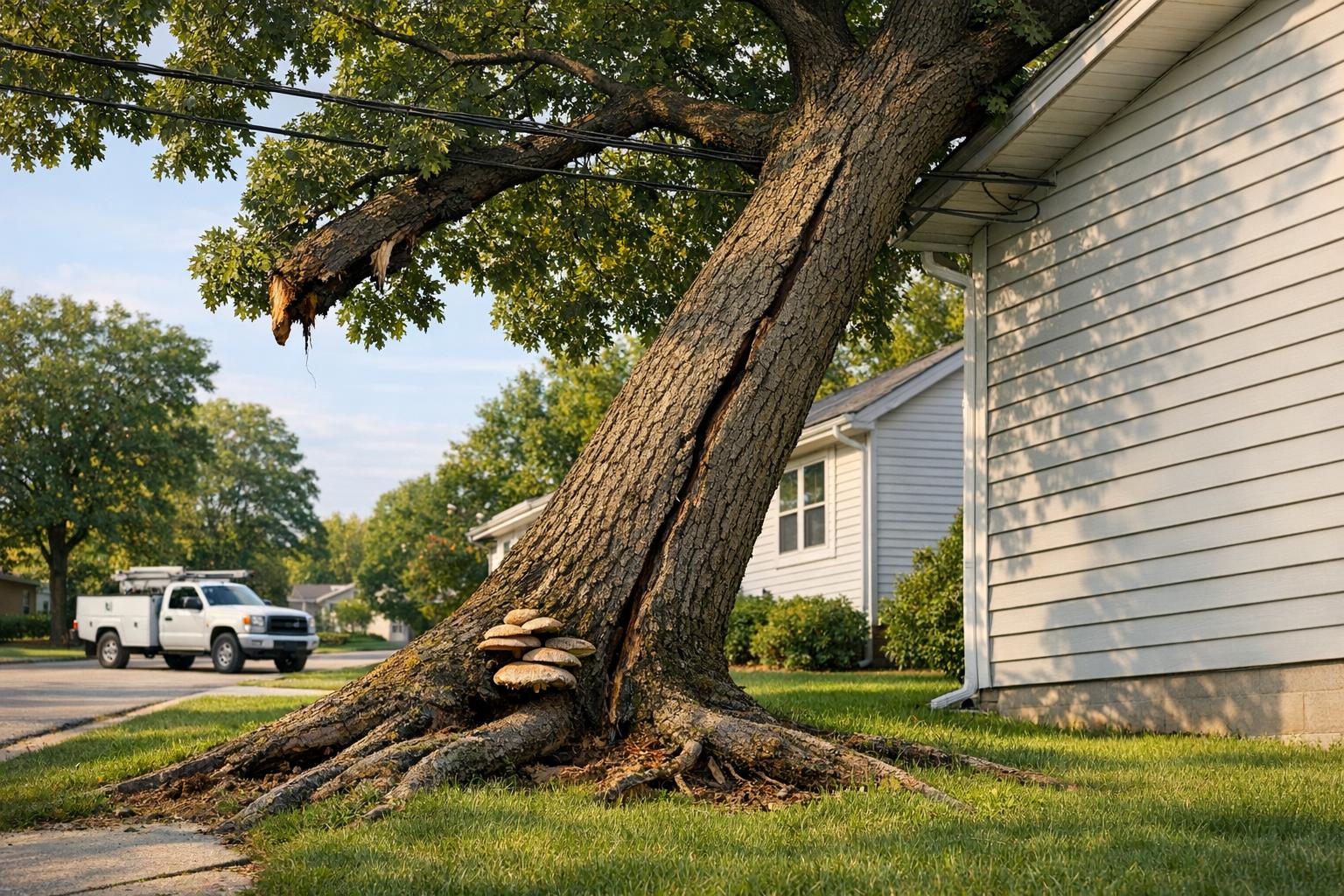
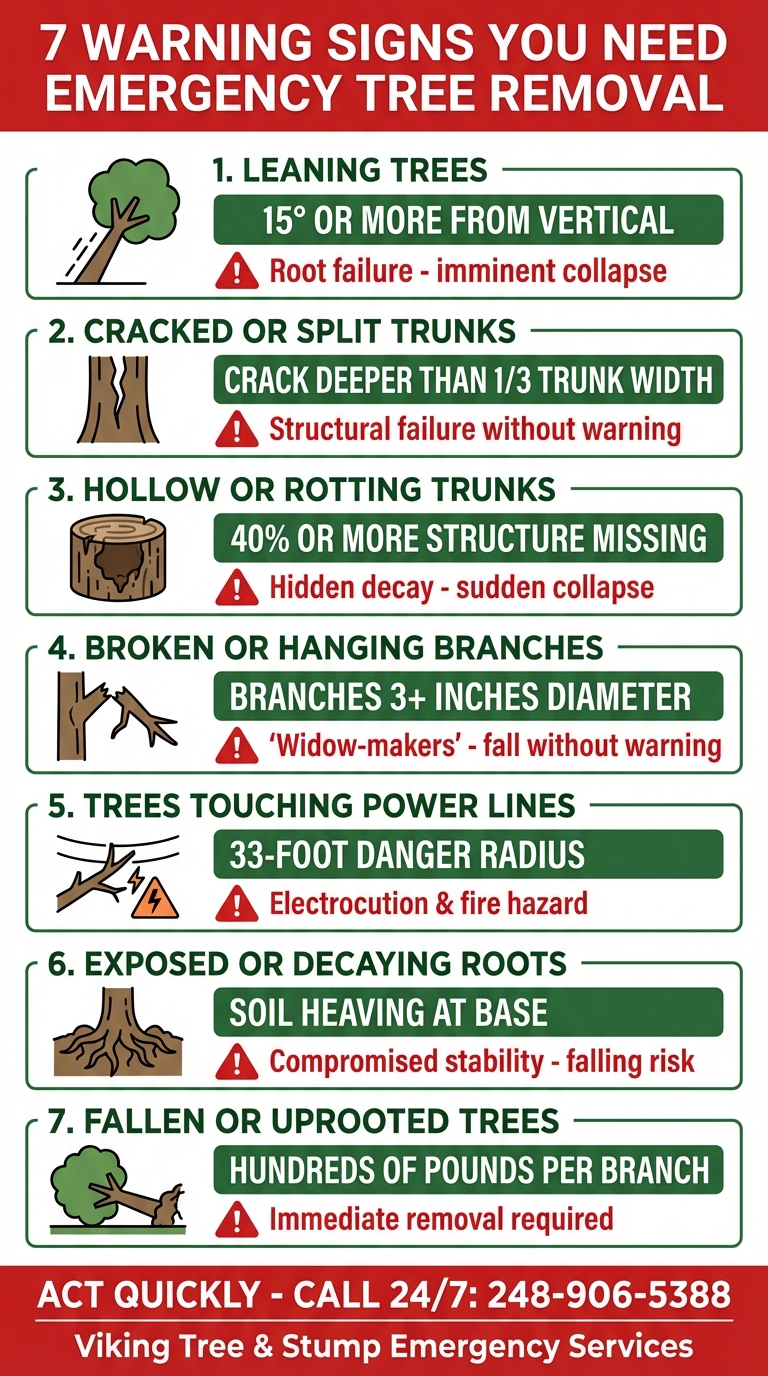
- Leaning Trees: Sudden leaning, especially over 15 degrees, often signals root failure and imminent collapse.
- Cracked or Split Trunks: Deep cracks weaken the tree’s structure, posing a risk of sudden failure.
- Hollow or Rotting Trunks: Internal decay reduces a tree’s strength, even if it looks healthy externally.
- Broken or Hanging Branches: These "widow-makers" can fall unexpectedly, causing injuries or damage.
- Trees Touching Power Lines: A severe safety hazard that can cause fires or electrocution.
- Exposed or Decaying Roots: Weak roots compromise stability, making the tree prone to falling.
- Fallen or Uprooted Trees: Immediate attention is needed to address damage and prevent further risks.
Acting quickly can save you thousands in repair costs and, more importantly, protect lives. If you notice any of these signs, block off the area and contact a certified arborist for professional evaluation and removal. Viking Tree & Stump offers 24/7 emergency services to ensure your safety.
7 Warning Signs You Need Emergency Tree Removal Services
1. Leaning Trees
Immediate Risk of Property Damage
A leaning tree is a major red flag, often signaling the need for urgent removal. If a tree suddenly starts to lean, it poses a serious risk to nearby structures and people. Unlike trees that naturally grow at an angle over time, a sudden lean points to root failure, meaning the tree is no longer securely anchored and could collapse at any moment.
Check the base of the tree for signs like soil heaving or cracks, which indicate significant root displacement. The Alabama Cooperative Extension System emphasizes, "If the mounded soil has cracks in it, consider the tree a serious problem". Trees in this condition can topple onto homes, vehicles, or other property, causing extensive damage.
Extent of Structural Damage to the Tree
The 15-degree rule is a practical guideline: any tree leaning 15 degrees or more from vertical – or even a smaller lean combined with signs of soil movement – should be removed immediately. As the University of Nebraska-Lincoln explains, "a tree that is leaning after a storm has major root failure. Even a slight lean with a small area of raised soil at the base can mean a significant potential for additional failure". These are clear signs that professional intervention is necessary.
Urgency for Professional Intervention
Tree failure can happen fast – sometimes within minutes, hours, or days. Experts at All About Trees strongly advise against attempting to stabilize the tree yourself. Instead, secure the area to protect people, pets, and vehicles from harm. If the tree poses a threat to your home or power lines, reach out to Viking Tree & Stump’s 24/7 emergency service. Costs for emergency removal typically range from $500 to $5,000+, depending on the tree’s size and its location near structures.
sbb-itb-a61c528
2. Cracked or Split Trunks
Structural Damage and Property Risk
A cracked or split trunk is a serious red flag that shouldn’t be ignored. When cracks go beyond the bark and into the wood itself, it’s a sign the tree is under extreme stress and may no longer be able to support its own weight. This structural failure can lead to catastrophic collapses, potentially damaging homes, cars, fences, or even play areas without any warning.
Hank Stelzer, Forestry State Specialist at the University of Missouri, puts it this way:
A rotten inner core in the trunk or structural weakness in branching patterns can cause a split trunk – the tree equivalent of a heart attack.
When a trunk splits, it disrupts the sap flow between the roots and leaves, making recovery nearly impossible. If the crack extends deeper than one-third of the trunk’s width, removal is often the safest option. Vertical cracks are particularly concerning and usually call for full tree removal. Horizontal cracks, though harder to spot, are even more dangerous as they weaken the tree significantly. Trees with multiple cracks or cracks near large branches (4 inches in diameter or more) are considered especially hazardous. Watch for signs like "in-rolled bark" around a crack, as this suggests a high risk of failure. For better visibility of these defects, inspect trees during late fall, winter, or early spring when the leaves are gone. These structural issues don’t just threaten property – they can also endanger lives.
Potential to Cause Personal Injury
Cracked trunks aren’t just a property risk – they’re a danger to anyone nearby. These weakened trees can fail during storms or even calm conditions. The scariest part? They often collapse without any warning, making them particularly dangerous.
Professor Emeritus Gary W. Moorman from Pennsylvania State University explains:
A tree presents a hazard if a defective part poses a high risk, upon its structural failure, to cause personal injury or property damage.
If you notice a tree with a cracked trunk, cordon off the area immediately to protect people and pets. Don’t wait – get a professional assessment as soon as possible.
Urgency for Professional Intervention
As All About Trees emphasizes:
A split goes all the way through a limb or trunk… It’s only a matter of time before the rest of the structure gives way.
Attempting to stabilize a cracked trunk on your own with ropes, wires, or bolts is not a safe solution. These methods require professional expertise and equipment. Emergency removal costs can vary widely, from $500 to over $5,000, depending on the tree’s size and location. If you notice any of these warning signs, contact Viking Tree & Stump’s 24/7 emergency service immediately for expert help.
3. Hollow or Rotting Trunks
Extent of Structural Damage to the Tree
Internal decay in a tree is a serious issue that often requires immediate attention. Even if the tree looks healthy on the outside, with a full canopy of green leaves, its core might be dangerously compromised. This hidden decay can drastically reduce the tree’s structural integrity, putting it at risk of collapse.
The general rule is this: if the outer layer of sound wood measures less than 1 inch for every 6 inches of trunk diameter, the tree is in trouble. For instance, a tree with a 24-inch diameter should have at least 4 inches of solid wood around its circumference to remain stable. If more than 40% of the tree’s structure is missing, it’s no longer safe and should be removed.
The U.S. Forest Service emphasizes the dangers of advanced decay:
Advanced decay, i.e., wood that is soft or decayed, or a cavity where the wood is missing can create a serious hazard.
Visible signs like mushrooms, conks, or bracket fungi growing on the trunk or near the roots are strong indicators of internal rot. These fungi are a red flag that the decay is already advanced, and the tree may be at risk of sudden failure.
Immediate Risk of Property Damage
A hollow or rotting tree near buildings, vehicles, or high-traffic areas poses a significant hazard. Unlike cracked trunks, which often show clear external damage, hollow trees can fail without warning, collapsing under their own weight. This makes them especially dangerous.
The risk becomes even greater when decay is located near heavy branches or critical attachment points. During storms or high winds, the tree may no longer be able to support its canopy, increasing the likelihood of a catastrophic failure. If the tree is within striking distance of a structure or frequently used area, it’s crucial to take precautions. Move portable items like picnic tables or vehicles away from the area and block access until a professional can evaluate the situation.
Urgency for Professional Intervention
When dealing with a hollow or rotting tree, professional assessment is not optional – it’s essential. Certified Arborist John Lang stresses:
If a third of the tree is rotted or hollow inside, it needs to be removed.
While you might be tempted to assess the damage yourself, this can be risky. A simple percussion test – tapping the trunk to listen for a hollow sound – might give you a rough idea, but it’s not enough. Only a trained arborist can accurately determine the extent of internal decay. Professionals often use advanced tools like ultrasonic tomography to measure the amount of sound wood remaining, even when the damage isn’t visible from the outside.
DIY solutions, like trying to stabilize the tree with makeshift supports, are not safe and can worsen the problem. These measures should be left to experts who understand how to handle such situations properly. If you notice signs of fungal growth, soft wood, or other warning indicators, contact Viking Tree & Stump for a professional evaluation.
Signs a Tree Needs Immediate Removal | Protect Your Home & Family
4. Broken or Hanging Branches
After internal decay, broken or hanging branches pose one of the most immediate dangers. Suspended broken branches, often called "widow-makers", can fall suddenly, leading to severe injuries. Certified Arborist John Lang highlights the risk:
Large, dead branches in the tree’s crown… are sometimes referred to as widow-makers because they can fall for seemingly no reason and seriously injure those below.
These branches can weigh hundreds of pounds, making them a serious threat to anyone or anything beneath them. Whether it’s people, pets, or property, the potential for harm is significant. Storms often worsen the situation, weakening branches that may appear stable but are structurally compromised. Forestry and Natural Resources Agent Ian Stone adds:
If the branch overhangs areas where people or pets frequent it could cause injuries if it fails.
Immediate Risk of Property Damage
Even smaller branches can wreak havoc. Branches between 1–3 inches in diameter can damage roofs or fences, while those over 3 inches can crush vehicles or cause major structural damage. A single falling limb has the power to shatter windows or leave you with repair bills far exceeding the cost of professional tree services.
Branches near power lines introduce another layer of risk. Not only can they fall, but they also pose fire and electrical hazards. If you notice a branch touching or close to power lines, report it immediately to the utility company.
Urgency for Professional Intervention
Removing hanging branches yourself is extremely dangerous. Homeowners should only handle small branches (under 1 inch in diameter) that can be safely reached from the ground. Anything larger – especially branches over 3 inches – requires professional tools and expertise. Never attempt to climb the tree or use a ladder for this purpose.
After storms, inspecting trees for hanging branches is critical. If you spot a large broken limb, block off the area beneath it immediately and contact a professional like Viking Tree & Stump for emergency removal. These branches are unstable and can fall even with minor wind or movement. DIY removal is risky and should be avoided at all costs. Acting quickly and relying on trained professionals will help protect your property and ensure safety, as emphasized throughout this guide.
5. Trees Touching Power Lines
When trees come into contact with power lines, the situation becomes extremely dangerous. The moisture within a living tree can conduct electricity, effectively turning the entire tree into a live electrical hazard. Experts in the field emphasize the seriousness of this risk.
National Grid warns:
If a tree branch touches a high-voltage power line, electricity from the line can make the branch so hot it catches fire. From there, the fire can spread to nearby trees, plants or buildings.
Risk of Personal Injury
Coming into contact with an electrified tree can result in severe electrocution. The danger extends beyond the tree itself – electricity can energize the ground within a 33-foot radius of the tree. If someone is injured by electrical shock, avoid touching them directly and call 911 immediately.
Property Damage and Liability Concerns
Tree branches touching power lines can cause electrical shorts, leading to fires or power surges that may damage electronics and appliances in your home. Beyond personal property damage, homeowners may also face liability for power outages caused by their trees. These outages can disrupt entire neighborhoods and even critical infrastructure.
Importance of Professional Help
This is not a problem to tackle on your own. Only trained and certified line-clearance tree trimmers are legally allowed to work near high-voltage power lines. Before any work begins, contact your local power company to de-energize the lines. Keep a safe distance of at least 33 feet from the tree, and do not use water in the vicinity, as it can conduct electricity. Attempting to address the issue yourself could be fatal.
Next, we’ll explore the dangers linked to exposed or decaying roots.
6. Exposed or Decaying Roots
Exposed or decaying roots are a clear warning sign that a tree has lost its stability. Roots play a vital role in anchoring the tree and supplying it with water and nutrients. When they decay or become exposed, the tree’s foundation weakens, putting both your property and safety at risk.
Extent of Structural Damage to the Tree
When major roots are damaged, the tree’s ability to stay upright and absorb essential resources is compromised. As Arbor Masters explains:
When major roots are damaged, your tree loses both its anchor system and its ability to take up water and nutrients.
One telltale sign of root decay is the presence of fungal growth, such as mushrooms or bracket fungi, around the tree’s base. These fungi are strong indicators of internal decay. Inspect the roots closely for signs of exposure or rot, as these issues often point to significant structural damage.
Immediate Risk of Property Damage
Failing roots often cause soil to heave near the tree’s base, signaling an increased risk of collapse. Henry’s Tree Service highlights:
A tree that suddenly leans more after wind or rain likely has compromised anchorage and poses a falling risk.
Trees with damage to roots on one side are especially prone to falling in the opposite direction during storms. If removal becomes necessary, costs can range from $200 to $2,000 depending on the size and complexity of the job.
Urgency for Professional Intervention
If you notice heaving soil or a sudden lean in a tree, it’s critical to act immediately. Cordon off the area and contact a professional, as root failure can result in the tree collapsing within minutes to days. All About Trees stresses:
A sudden lean is often a primary indicator of root failure… the tree is in the process of falling. It may be minutes, hours, or days before the roots fail to hold the tree any longer, but failure is imminent.
Avoid trying to assess the situation yourself. Professionals use advanced tools, like ultrasonic tomography, to detect hidden internal decay. They can determine whether the tree poses an immediate danger or if there’s potential for stabilization. However, quick action is essential to prevent further risks.
Next, we’ll discuss what steps to take when a tree has already fallen or been uprooted.
7. Fallen or Uprooted Trees
When a tree falls or becomes uprooted, it’s a situation that requires immediate attention. Much like leaning, cracked, or decaying trees, fallen or uprooted trees pose a serious threat to your property and safety, leaving little room for delay once they collapse.
Immediate Risk of Property Damage
Fallen trees can wreak havoc on your property. They can crush vehicles, tear through roofs, and destroy fences. Just one mature tree branch can weigh hundreds of pounds – enough to flatten a car or break through a house roof. Beyond physical damage, fallen trees can block driveways or roads, creating obstacles for emergency responders. If a tree falls onto or leans against power lines, the situation becomes even more dangerous, with risks of electrocution and potential fires.
Potential to Cause Personal Injury
The combination of weight and instability makes fallen trees a serious safety hazard. As Huff’s Tree Service puts it:
Large tree branches can weigh several hundred pounds and are a huge safety liability.
These trees and branches can cause crushing injuries or sudden impacts to anyone nearby. Because of these risks, handling fallen trees is a task best left to trained professionals.
Urgency for Professional Intervention
Attempting to remove a large fallen tree on your own is extremely dangerous. These situations demand specialized tools and expertise in rigging and physics to handle the weight and tension safely. If the tree is in contact with power lines, do not approach it. Instead, contact your local utility company to de-energize the lines first. It’s also crucial to cordon off the area to prevent family members or pets from wandering into the danger zone.
Understanding these critical warning signs highlights the importance of acting quickly. Let’s explore why partnering with Viking Tree & Stump is the smart choice for addressing these hazards.
Why You Should Act Quickly with Viking Tree & Stump
If you’ve noticed any of the warning signs we’ve mentioned, it’s time to act fast. Waiting to address a hazardous tree isn’t just risky – it can endanger your family, pets, and anyone on your property. As All About Trees puts it, "Gravity, combined with the immense weight of a mature tree, is an unforgiving force". A compromised tree can come crashing down without warning, especially during a storm.
Taking quick action isn’t just about safety – it can save you money. Removing a hazardous tree before it causes damage is far cheaper than dealing with the aftermath of a collapse, like fixing a damaged roof, replacing a fence, or filing an insurance claim. Acting promptly also prevents the spread of diseases and pests from sick or dying trees to the healthy ones in your yard, protecting your entire landscape. Our team is prepared to step in immediately to help you avoid these costly problems.
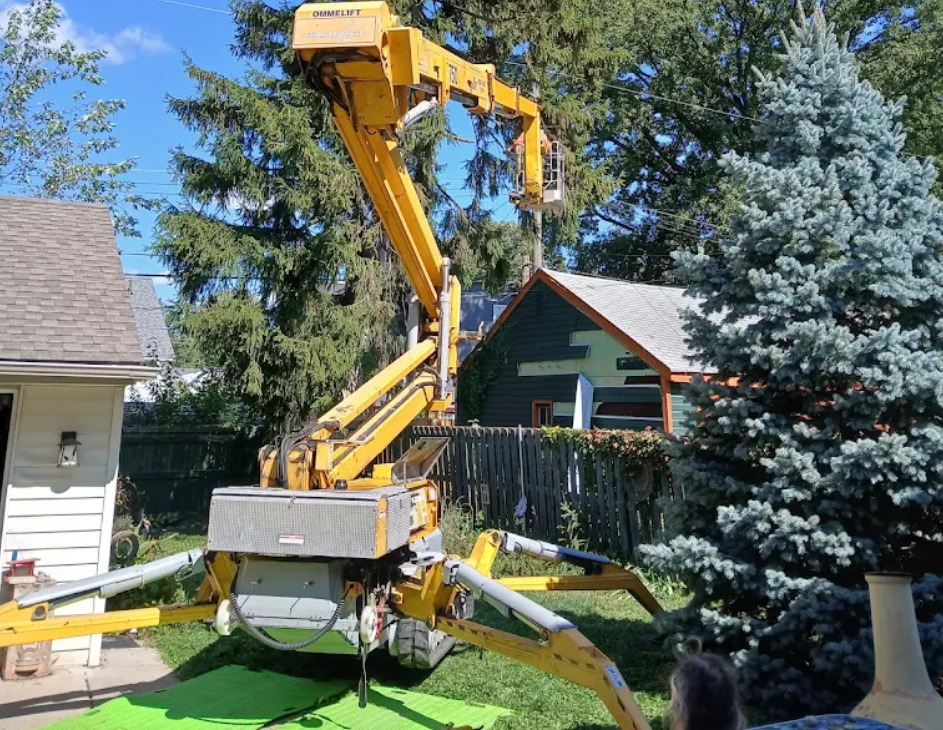
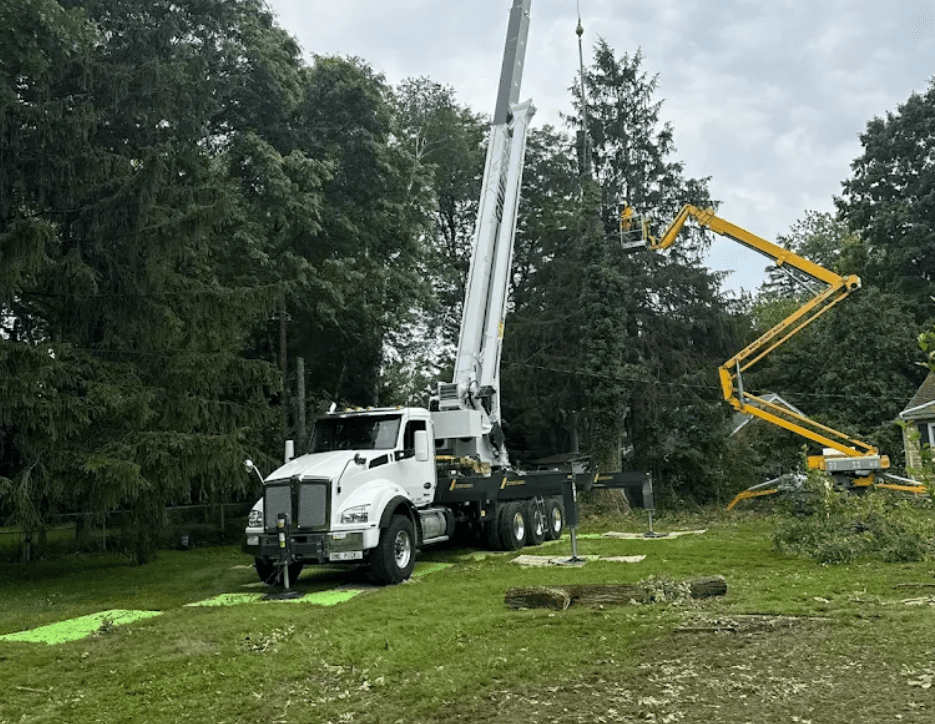
Our ISA-certified arborists are highly trained in rigging physics and ANSI A300 standards, allowing them to identify hidden decay and root issues that might not be obvious. Using specialized equipment and advanced rigging techniques, we carefully dismantle hazardous trees piece by piece, minimizing the risk of additional damage to your property.
Viking Tree & Stump offers 24/7 emergency services across Oakland and Macomb counties, including areas like Bloomfield Hills, Rochester Hills, Birmingham, and Clinton Township. Whether it’s a tree leaning at a dangerous angle or a "widowmaker" branch precariously stuck in the canopy, our certified professionals are ready to respond at any hour.
The longer you wait, the greater the risk of injuries, property damage, and expensive repairs. Viking Tree & Stump’s emergency team is standing by to evaluate your situation and provide swift, expert removal services when you need them most.
Viking Tree & Stump’s 24/7 Emergency Response
When tree emergencies happen, quick action is critical. That’s why Viking Tree & Stump offers a 24/7 emergency response team, ready to jump into action across Oakland, Macomb, and Wayne counties. Whether it’s the middle of the night or during a weekend storm, you can call their emergency hotline at 248-906-5388 for immediate help.
Their services cover a range of emergencies, including fallen trees, dangerous branches, storm damage cleanup, stump grinding, and debris removal.
"After a severe storm damaged several trees on our property, Viking’s emergency response team was there within hours. Their expertise and quick action prevented further damage to our home. Excellent service!" – Sarah M., Property Manager
Safety is a top priority in every operation. Viking Tree & Stump relies on specialized equipment and advanced rigging techniques to safely remove hazardous trees, even in tight urban spaces. When trees are in contact with power lines, they work with local utility providers to de-energize the lines before starting their work, reducing the risk of electrocution. Their team also follows strict safety protocols, using Tree Risk Assessment Qualification (TRAQ) methods to assess soil health, root stability, and internal decay.
With more than 20 years of experience and hundreds of satisfied local customers, Viking Tree & Stump has earned a reputation for fast, reliable service. They serve communities throughout Metro Detroit, including Bloomfield Hills, Rochester Hills, Birmingham, Clinton Township, Royal Oak, Troy, Grosse Pointe, and Ferndale. Whether it’s a residential or commercial property, their team ensures expert care and thorough cleanup to protect your safety and property.
Conclusion
Every warning sign – whether it’s a leaning tree, decaying roots, or cracked trunks – calls for swift action. Spotting these issues early can help prevent serious damage. For instance, a tree leaning more than 15%, hollow or cracked trunks, dangling "widowmaker" branches, contact with power lines, or evidence of root decay are all red flags that need immediate attention from professionals.
Taking action before a tree becomes a hazard can save you from hefty expenses. Removing a dangerous tree costs far less than repairing a damaged roof, replacing a crushed vehicle, or dealing with complicated insurance claims after an incident. Beyond financial concerns, addressing these risks promptly ensures the safety of your family, neighbors, and pets.
If you notice any of these signs, act quickly. Block off the area to protect people and pets. And if the tree is in contact with power lines, don’t try to handle it yourself – reach out to your utility provider to safely de-energize the lines.
For emergencies, Viking Tree & Stump offers 24/7 assistance at 248-906-5388 for urgent tree hazards in Oakland and Macomb counties. With certified arborists and specialized equipment, they’re prepared to handle even the toughest tree removals, helping to protect your loved ones, your property, and your peace of mind.
FAQs
What should I do if a tree is leaning dangerously toward my house?
If you see a tree leaning precariously toward your house, it’s crucial to take action right away to prevent damage or injury. Avoid trying to fix the issue yourself, as this can be dangerous and might make things worse. Instead, reach out to a certified arborist immediately to evaluate the tree and determine the safest solution.
The arborist may recommend options such as trimming, stabilizing, or fully removing the tree, depending on its condition. Acting quickly helps safeguard your home and ensures the well-being of everyone in the area.
How can I tell if a tree trunk is too hollow or decayed to be safe?
To figure out if a tree trunk is unsafe due to hollowness or decay, start by examining the wood. Look for soft, spongy, or cracked areas – these are often red flags. You can also tap the trunk and listen for a hollow sound, which might suggest internal decay. Pay attention to visible signs like large cavities, deep cracks, or dead branches, as these can weaken the tree and make it unstable. If you spot any of these problems, it’s a good idea to call in a professional to evaluate the tree’s safety.
Why should I hire professionals to remove trees near power lines?
Hiring professionals to handle tree removal near power lines is essential for ensuring safety and avoiding serious risks. These trained experts come equipped with the right tools and the expertise to manage the job without creating electrical hazards, sparking fires, or causing power outages.
Trying to tackle this task on your own can result in severe injuries, significant property damage, or even legal trouble. By relying on professionals, you can trust that the work will be done safely and efficiently, protecting your property and giving you peace of mind.