When dealing with leftover tree stumps, you have two primary options: stump grinding or stump removal. Each method has its pros and cons, depending on your goals, budget, and future plans for the area.
- Stump Grinding: This method grinds the stump 6–12 inches below the surface, leaving the roots to decay naturally. It’s faster, less expensive (costing $75–$400), and causes minimal yard disruption. However, some tree species may regrow from remaining roots, and it’s not suitable for replanting or construction in the same spot.
- Stump Removal: This involves extracting the entire stump and root system, leaving a clean slate for construction or replanting. It’s more thorough but labor-intensive, requiring heavy machinery. Costs range from $150–$1,000+, and it can take several hours, leaving a large hole that must be filled.
Quick Tip: Choose grinding for aesthetics and cost savings. Opt for removal if you’re replanting, building, or need a completely clear area.
Quick Comparison
| Factor | Stump Grinding | Stump Removal |
|---|---|---|
| Cost | $75–$400 | $150–$1,000+ |
| Time Required | 30–90 minutes | 3–8 hours |
| Root Removal | 80–90% remain | 95–99% removed |
| Yard Disruption | Minimal | Significant |
| Ideal For | Lawns, aesthetics | Construction, replanting |
Both methods have their uses. The right choice depends on your property’s needs and future plans.
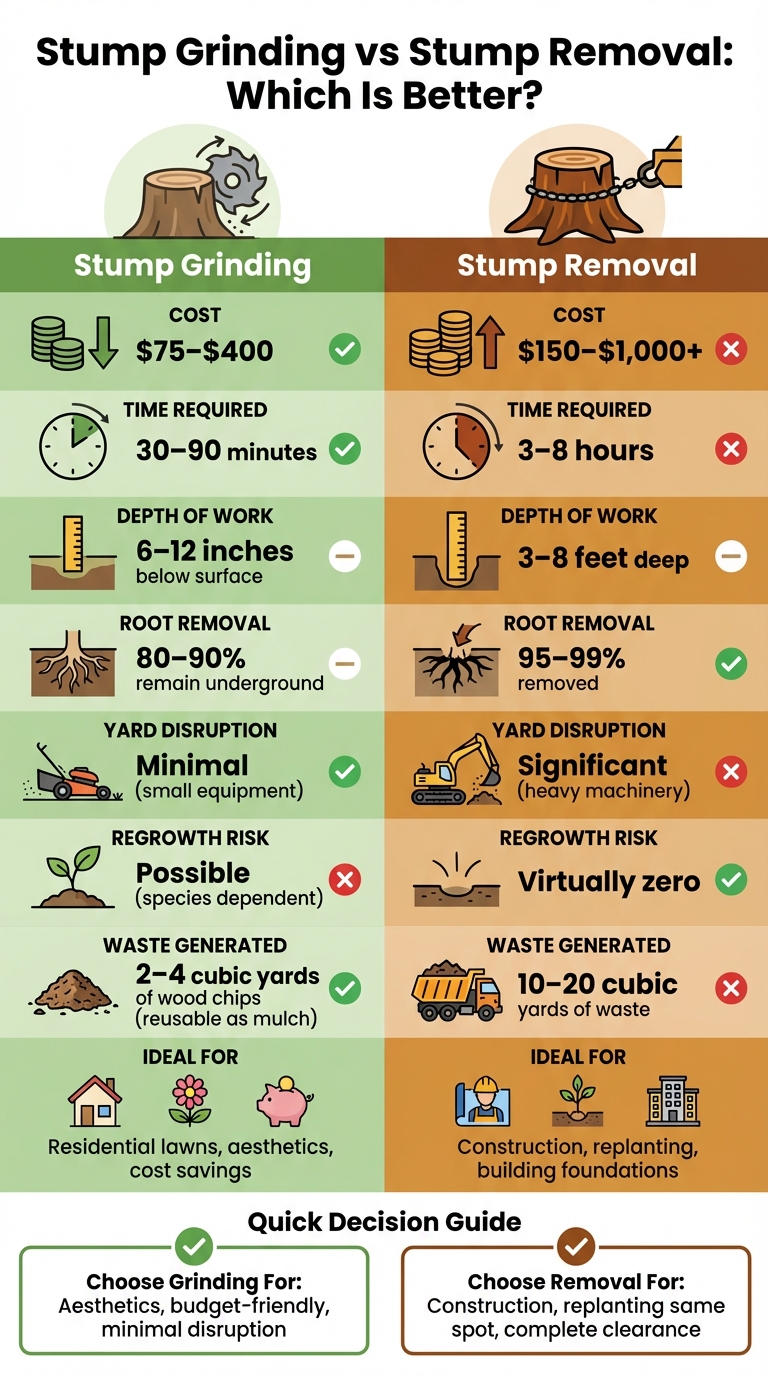
Stump Grinding vs Stump Removal Comparison Chart
Stump Removal vs Stump Grinding A Comprehensive Comparison
sbb-itb-a61c528
What Is Stump Grinding?
Stump grinding involves using specialized machinery to break down a tree stump into small wood chips or sawdust. Instead of removing the entire stump and root system, this method focuses on grinding the visible part of the stump and the upper roots just below the soil surface.
How Stump Grinding Works
A trained arborist operates a stump grinder, which is a machine equipped with a high-speed, rotating steel disk. This disk has carbide-tipped teeth that efficiently shred the wood. Allen Tate, Tree Healthcare Manager at Blooma Tree Experts, describes the process:
Stump grinding uses self-propelled grinders with spinning carbide teeth to break the wood apart. They usually grind the stump six to twelve inches below ground.
The operator carefully guides the machine over the stump, gradually grinding it down to a depth of 6 to 12 inches – enough for most landscaping needs. The process produces mulch-like wood chips that can either fill the resulting hole or be repurposed as garden mulch.
Unlike full stump removal, grinding leaves 80% to 90% of the root system in the ground. These roots naturally decompose over a period of 3 to 7 years. The time it takes to grind a stump varies, typically ranging from 30 minutes for smaller stumps to 2–3 hours for larger ones.
Benefits of Stump Grinding
Stump grinding offers several advantages, including speed, cost-effectiveness, and minimal disruption to the yard. It is generally 40% to 60% cheaper than complete stump removal.
Grinding also generates 2 to 4 cubic yards of wood chips from a large stump, which can be reused as natural mulch for garden beds – potentially saving $50 to $150 in disposal fees. Additionally, the compact and portable machinery can navigate tight spaces, reducing damage to the surrounding landscape compared to full removal. These factors make stump grinding a practical choice for maintaining both cost efficiency and yard aesthetics.
Next, we’ll take a closer look at stump removal to see how it compares.
What Is Stump Removal?
Stump removal involves extracting the entire stump along with its root system, ensuring almost no roots remain behind. Unlike stump grinding, which only removes the visible portion, this method leaves a large hole that must be filled with fresh soil.
The process is labor-intensive and requires heavy machinery such as excavators or backhoes to dig a trench, typically 3 to 8 feet deep, around the stump. As Red’s Tree Service explains:
Stump removal entails not only extracting the stump from your yard, but also all of the roots attached to it. As a result, you’ll need some seriously heavy-duty equipment.
To prevent damage to underground utilities, professionals must locate and mark them before starting. The equipment applies significant force to lift the root ball, with even small roots requiring hundreds of pounds of pressure to remove. After extraction, the resulting hole must be filled with topsoil, compacted, and leveled. This process may need ongoing attention as the ground settles over time.
How Stump Removal Works
The process starts by digging around the stump to expose the roots. Heavy machinery digs deep – sometimes as much as 8 feet – to access the main root system. Once exposed, the root ball is pulled out using hydraulic force or winches. This process can take 3 to 8 hours per stump, significantly longer than the 30 to 90 minutes typically required for grinding. The leftover debris must also be cleared away.
The final step involves filling the hole with high-quality topsoil or loam. Aaron Steil from Iowa State University Extension advises against relying solely on wood chips:
The shavings left behind from professional stump removal will drastically change the structure, moisture-holding capacity, and nutrient balance of the soil, making it difficult for any new turf or other plants to grow.
The soil should be added in layers and allowed to settle naturally. Since decaying roots beneath the surface can cause the ground to sink, periodic refilling may be needed over the next few years. These steps highlight why stump removal is often chosen when a thorough clearance is required.
Benefits of Stump Removal
For properties planning construction or replanting, stump removal offers clear advantages. Unlike grinding, this method ensures the root system is completely removed, preventing regrowth. This is especially important for species like willows and poplars, which can aggressively sprout new shoots if roots remain. Additionally, removal clears the area entirely, making it ready for building foundations, driveways, patios, or underground utilities. Red’s Tree Service emphasizes another major benefit:
Removal also opens the possibility of planting a new tree in the same spot as the old one. It leaves a hole full of rich, clean soil that’s optimal for tree growth.
Stump Grinding vs Stump Removal: Pros and Cons
When it comes to dealing with tree stumps, both grinding and removal have their own set of advantages and drawbacks. These methods differ in terms of cost, time, and how they affect your property.
Stump grinding is often the quicker and more affordable option. It’s less invasive, leaving most of the roots intact to decompose naturally. On the flip side, some tree species – like willows and poplars – might sprout new growth from the remaining roots.
Stump removal, on the other hand, goes deeper – removing 95–99% of the root system. This virtually eliminates the chance of regrowth and clears the area completely for construction or replanting. However, this method is more labor-intensive, requiring heavy machinery, and can cost 40% to 60% more than grinding. As Blooma Tree Experts explains:
Removal is more suitable for long-term or intensive land use. If you must replant where it was before… removal of the whole stump is usually the way to go.
Environmental Impacts
The environmental footprint of each process also varies. Grinding generates 2 to 4 cubic yards of wood chips, which can be reused as mulch. In contrast, removal produces 10 to 20 cubic yards of waste, including roots and soil. Grinding is less disruptive to the soil, but the remaining underground wood can attract pests like termites or carpenter ants. Removal eliminates this risk but involves more invasive excavation.
Choosing the Right Method
Your plans for the property should guide your decision. Stump grinding is a practical choice for lawns or shallow-rooted plantings, but the remaining root system makes it unsuitable for building foundations, driveways, or planting new trees in the same spot. Stump removal leaves a large hole that needs to be filled, but it offers a clean slate for any landscaping or construction project.
Comparison Table: Stump Grinding vs Stump Removal
| Factor | Stump Grinding | Stump Removal |
|---|---|---|
| Average Cost | $75 – $400 | $150 – $1,000+ |
| Time Required | 30 – 90 minutes | 3 – 8 hours |
| Depth of Work | 6 – 12 inches below grade | 3 – 8 feet deep |
| Yard Disruption | Minimal; small equipment | Significant; heavy machinery |
| Root Removal | 80–90% of roots remain | 95–99% of roots removed |
| Regrowth Risk | Possible (species dependent) | Virtually zero |
| Replanting | Difficult in the same spot | Immediate replanting possible |
| Ideal Scenario | Residential lawns, aesthetics | Construction, new foundations |
Cost Comparison: Stump Grinding vs. Stump Removal
The cost difference between stump grinding and stump removal largely comes down to the labor and equipment involved. Nationally, stump grinding costs typically range from $131 to $438, with an average price between $250 and $272 per job. On the other hand, full stump removal averages around $368 but can climb to $1,000 or more for more complex projects.
Why Stump Grinding Costs Less
Grinding is generally less expensive because it focuses only on removing the visible stump and a few inches below the surface. For standard-sized stumps, the process usually takes less than an hour. In contrast, stump removal is more labor-intensive. It involves extracting the entire root system with heavy equipment like backhoes or excavators, which can take several hours. Additionally, removal leaves behind a large hole that must be filled, costing $10 to $50 per yard for backfill materials.
Diameter and Pricing
The diameter of the stump plays a big role in determining the cost. Most services charge $2 to $6 per inch of diameter. For instance:
- A 24-inch stump might cost between $48 and $135 for grinding.
- A 48-inch stump could range from $96 to $290.
Many companies also have a minimum service fee of $100 to $150. If you have multiple stumps, you may save money, as discounts of $30 to $75 per additional stump are often available.
Factors That Influence Costs
Several additional factors can increase the price:
- Type of Wood: Hardwood stumps like oak, maple, or walnut are about 20% more expensive to grind than softwoods due to their density and the extra wear they cause on equipment.
- Soil Conditions: Rocky soil can push removal costs up by over 50%, as it increases the risk of damaging blades.
- Accessibility: Stumps on steep slopes, behind narrow gates, or near utility lines may result in extra fees – either $50 per hour or a flat rate of up to $200.
Hidden and Additional Costs
It’s important to account for extra expenses that may not be immediately obvious:
- Debris Removal: Hauling away debris can add $50 to $200.
- Permits: If the stump is near underground utilities, permits might cost between $100 and $500.
- Lawn Restoration: After the work is done, repairing the lawn (e.g., sodding) can cost about $1 to $2 per square foot.
One way to cut costs is by scheduling the work during the winter. Many contractors offer discounts of up to 20% during the off-season.
When to Choose Stump Grinding
Stump grinding shines in specific situations, especially for homeowners in neighborhoods like Bloomfield Hills or Rochester Hills. Its compact, maneuverable equipment is less likely to damage lawns or nearby plants compared to heavy-duty excavation machinery.
Another key advantage is speed. Stump grinding typically takes much less time than full removal. The shallow grinding process discourages regrowth and allows for replanting much sooner.
"Stump grinding is the better option for residential and commercial stump removers. It’s faster, cheaper, and less damaging to the surrounding yard than complete removal."
- Trenton Elkins, Red’s Tree Service
For those keeping an eye on costs, stump grinding is a budget-friendly option, costing about 40% to 60% less than full removal. Plus, the process generates 2 to 4 cubic yards of wood chips, which can be reused as mulch – provided the original tree wasn’t diseased.
This method is also a go-to choice for areas with limited access, like stumps behind narrow gates, near building foundations, or in tight backyards. It’s safer around underground utilities since it avoids the deep digging required for full removal. On top of that, grinding removes visible stumps, reducing tripping risks for kids and pets while also discouraging pests like termites and carpenter ants from settling in.
With these benefits, stump grinding is often the best solution for residential properties. However, some projects may still call for full stump removal, depending on specific needs.
When to Choose Stump Removal
If long-term stability is your goal, full stump removal is the way to go. Unlike grinding, which leaves most of the roots underground to decay over time, full removal eliminates nearly all of the stump and root system. This method is ideal for projects where precision and a clean slate are essential, such as construction or landscaping plans.
For example, if you’re planning a new foundation, deck, patio, driveway, or underground utility lines – especially in places like Troy or Shelby Township – full removal is highly recommended. Leftover roots can decay over time, causing the ground to settle or interfering with installations. Commercial properties, too, benefit from complete removal when preparing land for parking lots or building expansions, as it ensures a stable foundation for future structures.
Replanting in the same spot? Full removal is the better option here as well. By clearing out the root system and backfilling the space with nutrient-rich soil, you create an environment where a new tree can thrive without competing with decaying roots. It also prevents regrowth from species prone to sprouting from leftover roots.
"If you plan to build, pave, or landscape heavily, removal clears the ground completely."
Full removal is also necessary when roots are causing damage, like cracking sidewalks or lifting driveways. Additionally, if the tree was infested with pests like termites or carpenter ants, removing the root system eliminates their habitat. While full removal is more expensive – typically ranging from $300 to $500, about 40% to 60% more than grinding – the added cost is worth it for the stability and peace of mind it provides, especially for intensive projects.
Why Choose Viking Tree & Stump for Your Stump Grinding or Removal Needs
If you’re dealing with stubborn stumps in Oakland, Macomb, or nearby counties, Viking Tree & Stump has you covered. Their certified arborists use specialized tools to provide customized solutions. Whether you need stump grinding or a full removal, their Advanced Services plan offers options tailored to your needs. Homeowners in places like Troy, Shelby Township, and Royal Oak often prefer grinding for its speed and cost-effectiveness. On the other hand, businesses preparing for parking lots or new construction usually opt for full removal due to its thoroughness. This ensures you get a solution that matches your project’s scope and safety requirements.
What really sets Viking Tree & Stump apart is their 24/7 emergency response service, which is a lifesaver when storms hit metro Detroit. Uprooted stumps and root balls can create dangerous tripping hazards or unstable ground. Their emergency crews act fast, coordinating with local utility locators (by calling 811) to safely remove hazards before they cause more damage or attract pests like termites and carpenter ants. These rapid-response teams not only handle immediate dangers but also offer expert evaluations to address longer-term needs.
Each stump removal begins with a detailed evaluation by their certified arborists, who consider the tree species, location, and your future plans. For instance, stumps from trees like willows or poplars, which are prone to regrowth, are often recommended for full removal to eliminate the root system. If the stump is near critical infrastructure like plumbing or irrigation lines, they use methods designed to protect those systems. These recommendations align with earlier discussions about choosing between grinding and full removal – whether your goal is quick visual improvement or preparing the site for construction.
Viking Tree & Stump serves metro Detroit areas, including Oakland, Macomb, Troy, Shelby Township, Birmingham, Bloomfield Hills, Rochester Hills, Clinton Township, and Franklin. They handle both residential and commercial projects with precision. Grinding creates mulch-ready wood chips, while full removal prepares the ground for construction or replanting.
Their commitment to safety and expertise is evident in their use of advanced equipment. Stump grinders, equipped with high-powered rotating carbide teeth, require skilled handling, while full stump excavation demands careful precision to avoid damage to gas or water lines. With Viking Tree & Stump, you can trust the job will be done safely and efficiently, whether it’s a single backyard stump or a large commercial site ready for development.
Conclusion
Deciding between stump grinding and stump removal comes down to your property’s needs and your future plans. Stump grinding offers a quick and budget-friendly way to clear up unsightly stumps, making room for landscaping while allowing the remaining roots to naturally decay over time. On the other hand, full stump removal involves digging 3 to 8 feet deep to extract 95–99% of the stump and root system. While more labor-intensive, this method is ideal for projects that require a completely clear site, such as construction, utility installations, or planting a new tree in the same spot.
For projects like foundations, patios, or driveways, full removal ensures there won’t be any roots left behind to interfere. Similarly, if the stump comes from an aggressive tree species that could regrow from remaining roots, removal is the better choice to avoid future problems. However, if your goal is simply to eliminate a tripping hazard or improve your lawn’s appearance without significant disruption, grinding is a practical solution.
The team at Viking Tree & Stump can help you make the right decision by assessing your situation, taking into account the tree species, its location, and your long-term plans. Their certified arborists provide expert guidance and handle everything from the evaluation to the cleanup, ensuring safe and efficient work. Whether you’re in Troy, Rochester Hills, or anywhere in Oakland and Macomb counties, they’re ready to assist with your stump-related needs.
FAQs
How do I decide between stump grinding and stump removal?
Choosing between stump grinding and stump removal comes down to your specific needs, budget, and what you envision for the area.
Stump grinding is a quicker, less disruptive, and more budget-friendly choice. This process grinds the stump below ground level while leaving the roots in place. It’s a great option if you’re looking to clear the space for landscaping or reduce safety hazards. However, keep in mind that the remaining roots may decay over time or, in some cases, sprout new growth.
On the other hand, stump removal involves extracting the stump along with its entire root system. This method is better suited if you’re planning to plant a new tree, construct something on the site, or completely clear the area. While it eliminates the chance of regrowth, it’s more labor-intensive, expensive, and can significantly disturb the surrounding landscape.
Think about your long-term goals, how much disruption you’re comfortable with, and your budget to decide which option fits your property best.
Will stump grinding affect the health of my lawn or garden?
Stump grinding can have a noticeable impact on your lawn or garden’s health, depending on how the process is managed and what happens with the leftover roots. While grinding removes the visible part of the stump, the roots remain underground. If not addressed, these roots might sprout again, leading to regrowth issues. Another factor to consider is the wood chips left behind. These chips have a high carbon-to-nitrogen ratio, which can temporarily rob the soil of nutrients, potentially hindering the growth of new grass or plants.
To keep your lawn or garden thriving after stump grinding, proper site preparation is key. Steps like adding fresh soil, using fertilizer to replenish nutrients, and keeping an eye on any signs of root sprouting can make a big difference. With a little care, you can set the stage for healthy growth and a vibrant yard.
Is it environmentally safe to leave roots in the ground after stump grinding?
Yes, leaving roots in the ground after stump grinding is generally safe for the environment. Stump grinding primarily removes the visible portion of the stump and a few inches of the roots below the surface. The remaining roots are left to naturally break down over time, which helps return nutrients to the soil and supports microbial activity.
That said, large or widespread root systems might occasionally lead to minor concerns, like soil settling, erosion, or complications with future landscaping or construction projects. These issues tend to develop slowly and are usually easy to address. Overall, letting roots decompose naturally is an eco-friendly approach that benefits soil health and encourages biodiversity.