A hazardous tree is one with structural issues that could cause it to fail and harm people or property. Key warning signs include dead branches, cracks, fungal growth, leaning trunks, and root problems. These trees are dangerous when located near "targets" like buildings, vehicles, or public spaces.
Key Points:
- Common Defects: Dead wood, cracks, weak branch unions, decay, cankers, poor architecture, and root issues.
- Inspection Tips: Look for dead branches, fungal growth, or leaning trees. Check after storms or heavy snow.
- Legal Responsibility: Property owners are liable for damage if they ignore risks.
- Handling Hazardous Trees: Avoid DIY removal – hire certified arborists for safety.
- Prevention: Plant trees in proper locations and perform regular maintenance.
If you spot a hazardous tree, act quickly to prevent injuries or property damage. For severe risks, consult a professional tree care service.
How to recognize a hazard tree BEFORE someone gets hurt!
sbb-itb-a61c528
Warning Signs of Hazardous Trees
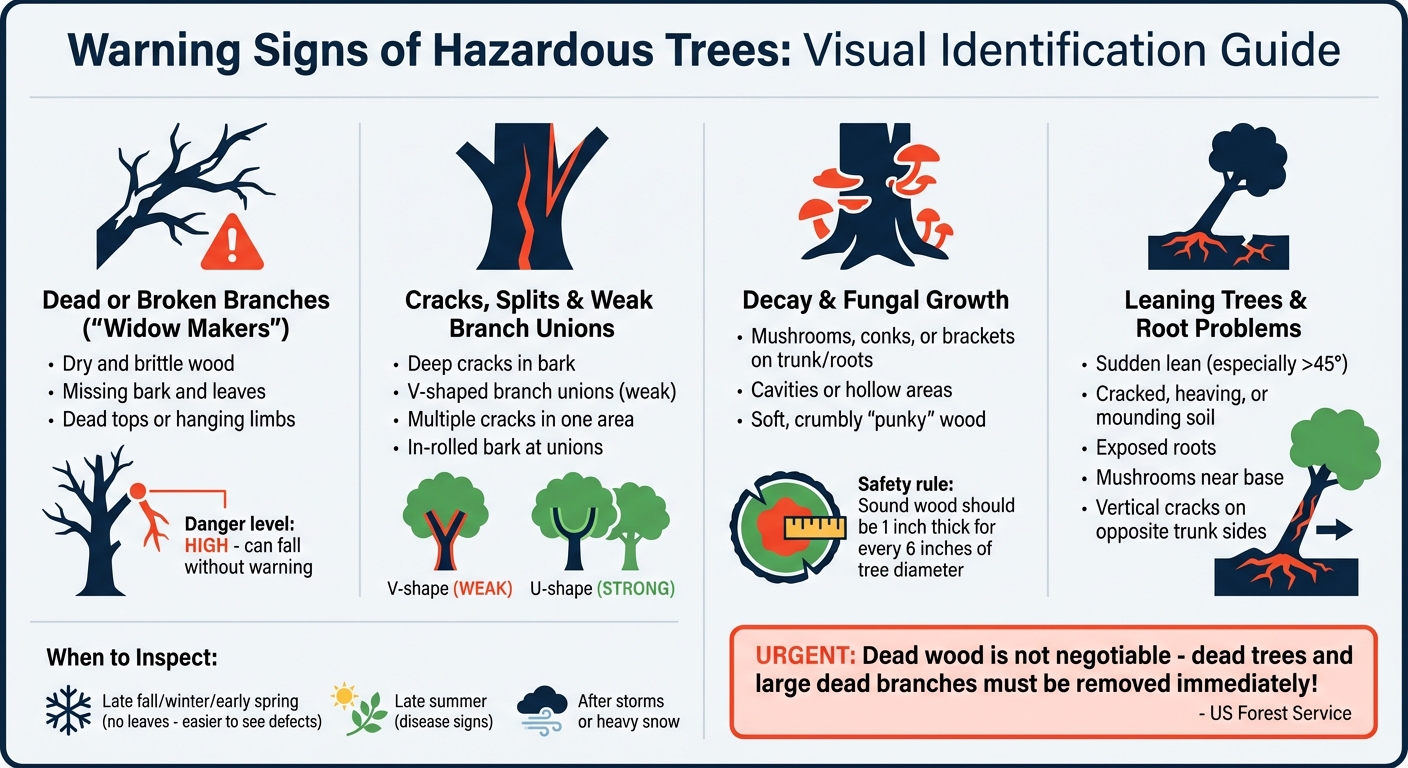
Visual Guide to Identifying Hazardous Tree Warning Signs
Spotting problems early can save lives and prevent property damage. The US Forest Service emphasizes this point:
"Dead wood is ‘not negotiable’– dead trees and large dead branches must be removed immediately!"
Here are the main warning signs to keep in mind during tree inspections.
Dead or Broken Branches
Dead branches are one of the easiest warning signs to spot. Unlike healthy branches, dead wood is dry and brittle, often missing bark and leaves. These so-called "widow makers" can fall at any moment, creating serious hazards. Dead tops or hanging limbs are especially concerning since they can come down without warning, endangering people and property below.
Once you’ve checked for dead branches, move on to cracks and weak unions.
Cracks, Splits, and Weak Branch Unions
Deep cracks in the bark can signal that a tree is on the verge of failure. The danger increases if there are multiple cracks in one area or if they’re paired with signs of decay. Pay close attention to V-shaped branch unions, where two stems of similar size meet at a sharp angle. As Drew C. McLean and colleagues from UF/IFAS explain:
"Narrow branch unions that make a sharp V-shape often have included bark… and are considered more likely to fail than a branch union that makes a smooth U-shape"
The in-rolled bark at these unions creates a weak point that can’t support much weight.
Next, look for evidence of decay and fungal growth.
Decay and Fungal Growth
Internal decay weakens a tree from the inside out, even if the exterior looks fine. Mushrooms, conks, or brackets growing on the trunk, branches, or near the roots are clear signs of internal decay. The USDA Forest Service explains:
"A tree usually decays from the inside out, eventually forming a cavity, but sound wood is also added to the outside of the tree as it grows"
This means a tree can appear healthy – green leaves and all – while being hollow inside. Watch for cavities, soft or crumbly wood (often called "punky" wood), and fungal growth at the base. A general safety rule is that the outer layer of sound wood should measure at least 1 inch thick for every 6 inches of the tree’s diameter.
Leaning Trees and Root Problems
A tree leaning at an unusual angle or showing signs of root damage is another red flag. While some trees naturally grow at an angle, a sudden lean is a serious concern. According to UC ANR, actively leaning trees need to be removed immediately. Look for soil around the base that’s cracked, heaving, or mounding – these are signs the root plate may be lifting. A lean greater than 45° is especially dangerous.
Root problems are tricky because they’re often hidden underground. Certified arborist John Lang highlights this challenge:
"A tree’s roots are perhaps the most important factor in terms of structure, but root defects tend to be difficult to spot. Even a tree that appears healthy can have serious problems below ground"
Signs of root trouble include mushrooms near the base, exposed roots, or vertical cracks on opposite sides of the trunk.
When to Inspect Trees: Check trees in late fall, winter, or early spring when leaves are absent, making cracks and weak unions easier to see. Inspect again in late summer for signs of disease. Severe weather events like storms or heavy snow can also expose hidden weaknesses, so it’s essential to examine trees afterward.
How to Handle and Remove Hazardous Trees Safely
Inspecting Trees and Assessing Risk Levels
Start by examining all visible parts of the tree – roots, trunk flare, main stem, and branches – from multiple angles. Use tools like binoculars to safely check higher branches and a mallet to tap for hollow sounds that may indicate internal decay.
A tree becomes hazardous when a structural defect aligns with a potential target, such as people, vehicles, buildings, or public spaces. As the Arbor Day Foundation explains:
"A tree with structural defects likely to cause failure is considered a ‘high risk or hazardous tree’ if it could strike a target".
Sometimes, the solution is as simple as removing the target – like relocating a picnic table or blocking access to the area.
Focus on trees that lean over 45°, have cracked or heaving soil, show cankers covering more than half the trunk, or contain cavities exceeding 40% of their structure. Keep detailed records of your inspections, including photos and notes on dates and specific issues. These steps lay the foundation for addressing tree hazards safely.
Why DIY Tree Removal Is Dangerous
If your inspection confirms a tree poses a high risk, think twice before attempting removal on your own. Hazardous tools like chainsaws add to the danger, as do falling branches and the unpredictable behavior of trees during cutting. Climbing or working at heights beyond your reach, especially near power lines, increases the risks significantly. In these situations, calling a professional is essential.
Professional tree care providers carry insurance to cover potential damages, while DIY efforts leave you fully responsible for any accidents. Additionally, internal decay or root damage often goes unnoticed without specialized diagnostic tools.
Working with Professional Tree Care Services
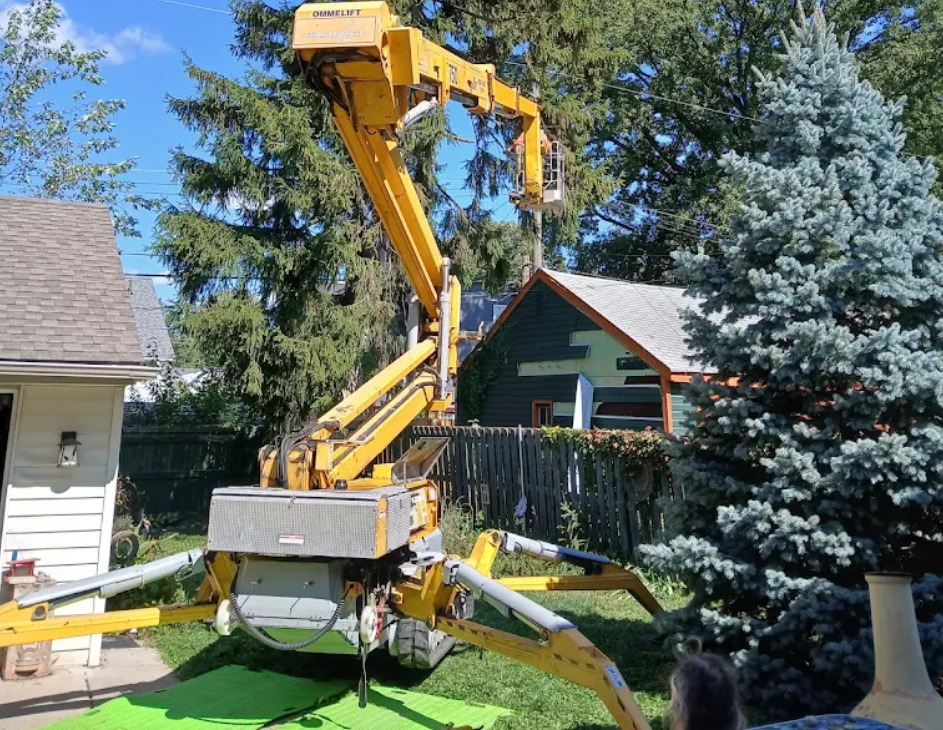
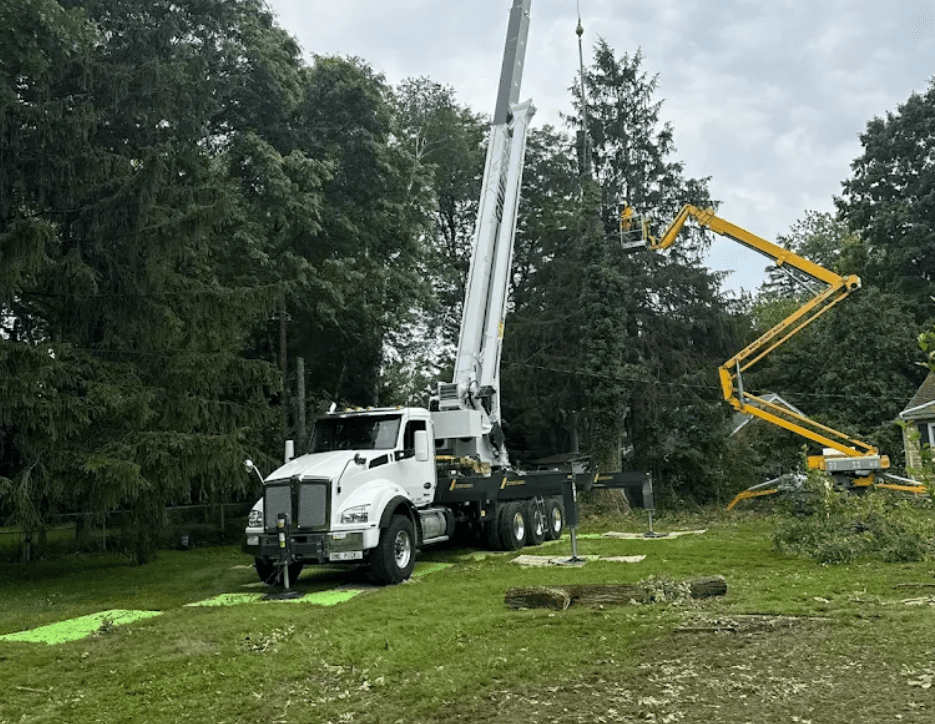
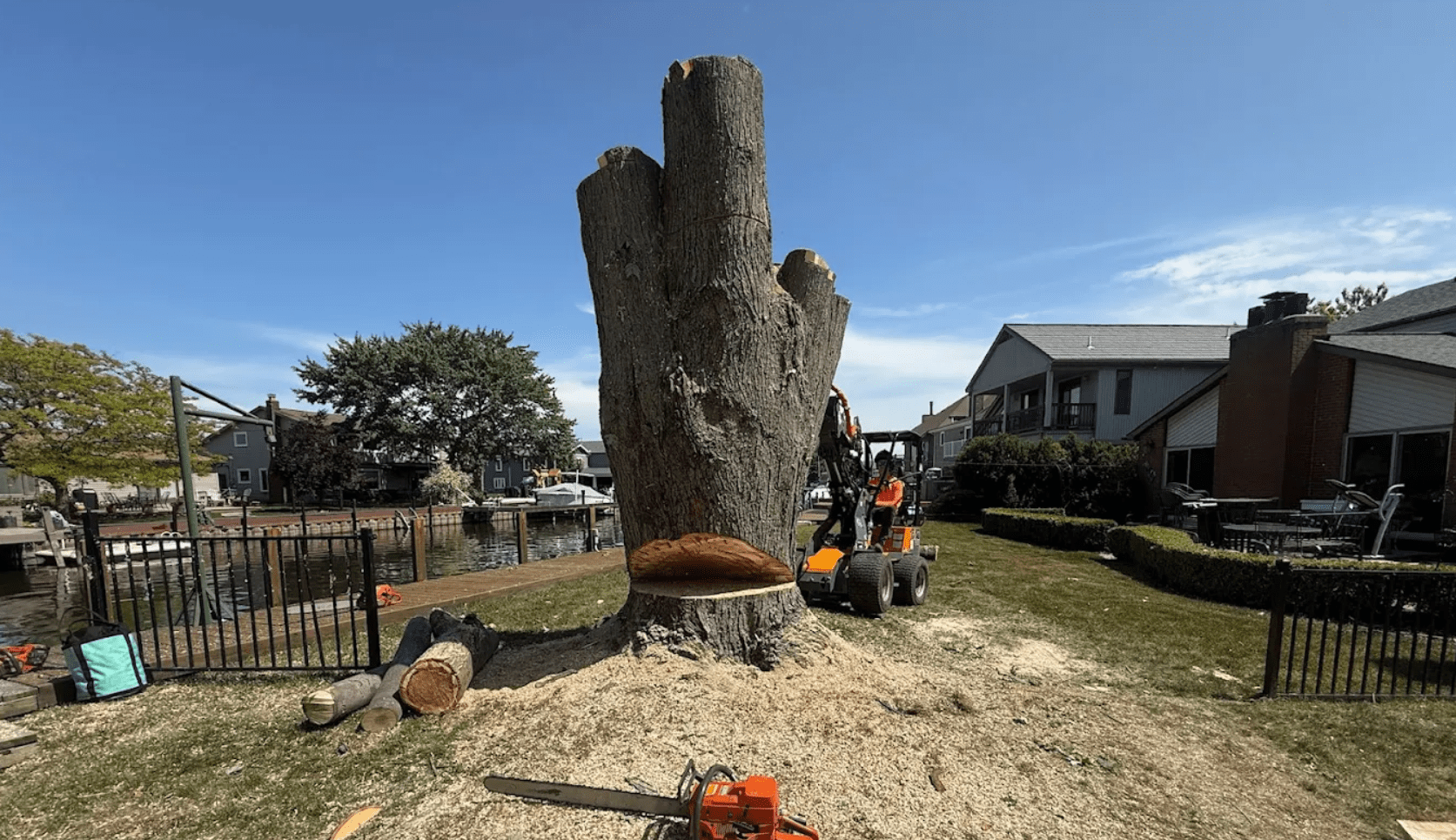
Viking Tree & Stump is one example of a professional service equipped to handle hazardous tree removals safely. Their certified arborists use advanced equipment like cranes and aerial lifts to manage large-scale jobs and trees near structures. They also offer 24/7 emergency services for urgent situations.
When choosing a tree care provider, look for certifications from reputable groups like the International Society of Arboriculture (ISA) or the American Society of Consulting Arborists (ASCA). Certified professionals can assess tree conditions using advanced tools, such as sonic tomography and resistance-recording drills, to detect hidden decay. This expertise not only reduces risks but also ensures the process aligns with established safety practices.
How to Prevent Hazardous Trees
Choosing the Right Trees and Planting Locations
Preventing hazardous trees starts with selecting the right species for the right spot. Tree roots typically spread at least 1.5 times the width of the tree’s crown. If a tree is planted too close to a foundation, driveway, or sewer line, it may cause structural damage as it grows.
Here are some basic spacing tips:
- Small trees should be planted at least 8–10 feet from any structures.
- Medium trees need about 15 feet of space.
- Large trees require at least 20 feet of clearance.
When planting near power lines, opt for small species like eastern redbuds or flowering dogwoods. This avoids future conflicts with utility wires and eliminates the need for harmful practices like topping, which weakens trees and makes them prone to decay.
It’s also important to match the tree to your site’s conditions. For instance, trees planted in poor soil or areas with inadequate drainage often become liabilities over time. In urban settings, limited space can lead to smaller root systems, making trees more vulnerable to storm damage.
While proper planting provides a strong start, ongoing care is just as critical.
Routine Tree Maintenance
Regular maintenance is key to preventing tree-related hazards. Schedule annual inspections and check trees after severe weather events like storms or heavy snow. Certified Arborist John Lang from Friendly Tree explains:
"A healthy and happy tree that is properly maintained is far less likely to become a hazard than one that is ignored".
When inspecting trees, binoculars can help you safely examine high branches. Look for signs of decay, such as dead branches or bare spots in the canopy. The U.S. Forest Service emphasizes:
"Dead wood is not negotiable– dead trees and large dead branches must be removed immediately!".
For deciduous trees, inspections are easiest from late spring through early fall when the canopy is full. Pay attention to structural issues like weak "V-shaped" branch unions or co-dominant stems. According to the New York State Department of Environmental Conservation:
"The best time to correct these weak attachments is while the tree is young".
Avoid harmful practices like topping or tipping to reduce tree size. These techniques create large wounds that lead to decay and unsafe regrowth.
Construction projects near trees require additional precautions to protect their health and stability.
Protecting Trees During Construction
Construction can severely impact trees, with damage sometimes becoming visible 5 to 7 years after the work is completed. Since most tree roots are concentrated in the top 12 to 18 inches of soil and extend 2 to 3 times the width of the tree’s branches, protecting the root zone is essential.
Before starting construction, mark the locations of buildings, driveways, and utility lines to safeguard nearby trees. Use fencing to block off the drip line and prevent heavy equipment or material stockpiles from compacting the soil or damaging roots.
If utilities need to be installed near a tree, tunneling under the roots at a depth of 3 to 4 feet is a better option than trenching, which can sever up to half of the root system. When trenching is unavoidable, use sharp pruning saws to make clean cuts on roots – ragged wounds from heavy machinery can lead to decay. In areas where traffic is unavoidable, apply 6 to 12 inches of wood chip mulch over geotextile fabric to protect the soil.
After construction, help trees recover by aerating compacted soil. Pull cores 12 to 18 inches deep and fill them with compost. Water deeply during dry spells for several years, and maintain a 2- to 4-inch mulch layer around the tree’s base, keeping it clear of the trunk to avoid rot. Avoid fertilizing stressed trees for 1 to 2 years, as added nitrogen can make them more vulnerable to pests.
Conclusion
Hazardous trees often give clear warning signs, such as dead or broken branches, deep cracks, V-shaped branch unions with in-rolled bark, fungal growth at the base, or leaning trunks with heaving soil. However, these trees become dangerous only when their defects are located near a target, such as people or property. In cases of severe internal decay, like large cavities, removal may be unavoidable.
Timely action is critical, as property owners can be held legally responsible for any damage or injuries caused by failing trees if they neglect proper maintenance. Seeking professional advice ensures safer and more informed decisions. As the Arbor Day Foundation points out, "removal should be an act of last resort". Certified arborists can often save trees through methods like cabling, bracing, or corrective pruning, avoiding unnecessary removal.
Avoid attempting tree removal on your own – specialized tools and techniques are required for safe handling. If the hazardous tree is near power lines, contact your local utility company right away.
FAQs
What are the warning signs of a hazardous tree?
A hazardous tree often gives itself away through several telltale signs. Be on the lookout for visible decay, such as rotting wood or fungal growth – both can severely weaken the tree’s structure. Cracks or splits in the trunk or large branches, along with dead or dangling limbs, are also clear warning signals. Watch for weak branch unions, where branches are poorly connected to the trunk, and check for root problems, like visible damage or exposed roots, which can undermine the tree’s stability. Spotting these issues early is crucial to maintaining safety and avoiding further complications.
Why should I hire a certified arborist for tree removal?
Hiring a certified arborist is a smart move when it comes to safely managing hazardous trees. These professionals are trained to spot risks like decay, weak branches, or root problems that might cause accidents or damage to your property. Based on their assessment, they can suggest the most effective solution – whether that’s pruning, cabling, or complete removal.
Removing trees, particularly large or unstable ones, is no simple task. It’s risky and demands specialized tools and expertise. Certified arborists not only ensure the work is done safely but also reduce potential dangers to people and nearby structures. Plus, they adhere to local regulations and industry standards, so you can rest easy knowing the job is being handled responsibly and with care.
What steps can I take to keep my trees safe and prevent them from becoming hazardous?
To keep your trees healthy and reduce risks, start with regular check-ups, especially if they’re large or mature. Watch for red flags like leaning trunks, cracks, weakly attached branches, or spots of visible decay. Be extra cautious after storms or heavy snow, as these can cause damage that isn’t always obvious at first glance.
Taking care of your trees proactively – like regular pruning and planting them in the right spots – can help avoid structural problems down the road. If you notice signs of disease, pests, or damage, address them quickly. For trees near buildings or busy areas, it’s wise to seek advice from a professional arborist who can provide tailored care and maintenance. Keeping an eye on your trees now can save you from bigger headaches later.