Tree removal costs in 2026 vary widely depending on the tree’s size, location, and condition. On average, expect to pay $750, with typical prices ranging from $200 to $2,000. Emergency removals or complex jobs can exceed $5,000. Smaller trees (under 30 feet) cost between $150 and $450, while larger trees (over 80 feet) can start at $1,000 and go beyond $2,000. Factors like proximity to buildings, accessibility, and additional services such as stump grinding ($120–$500) or debris hauling ($70–$150) can increase costs. Permits, often required for larger trees, add $60 to $150.
Key Points:
- Tree size: Height and diameter directly affect cost.
- Location: Hard-to-reach or hazardous areas increase expenses by 25%–50%.
- Condition: Diseased or storm-damaged trees require extra safety measures, raising costs.
- Additional services: Stump removal, permits, and cleanup are not always included in base pricing.
- Regional differences: Costs vary across states and urban vs. rural areas.
Hiring professionals ensures safety, proper equipment use, and compliance with local regulations. For emergencies or large-scale jobs, rates can rise significantly, but bundling services or scheduling during low-demand seasons (winter/spring) may reduce expenses.
Tree Removal Cost Guide 2026: Pricing by Size and Additional Services
Average Tree Removal Costs in 2026
Standard Price Ranges
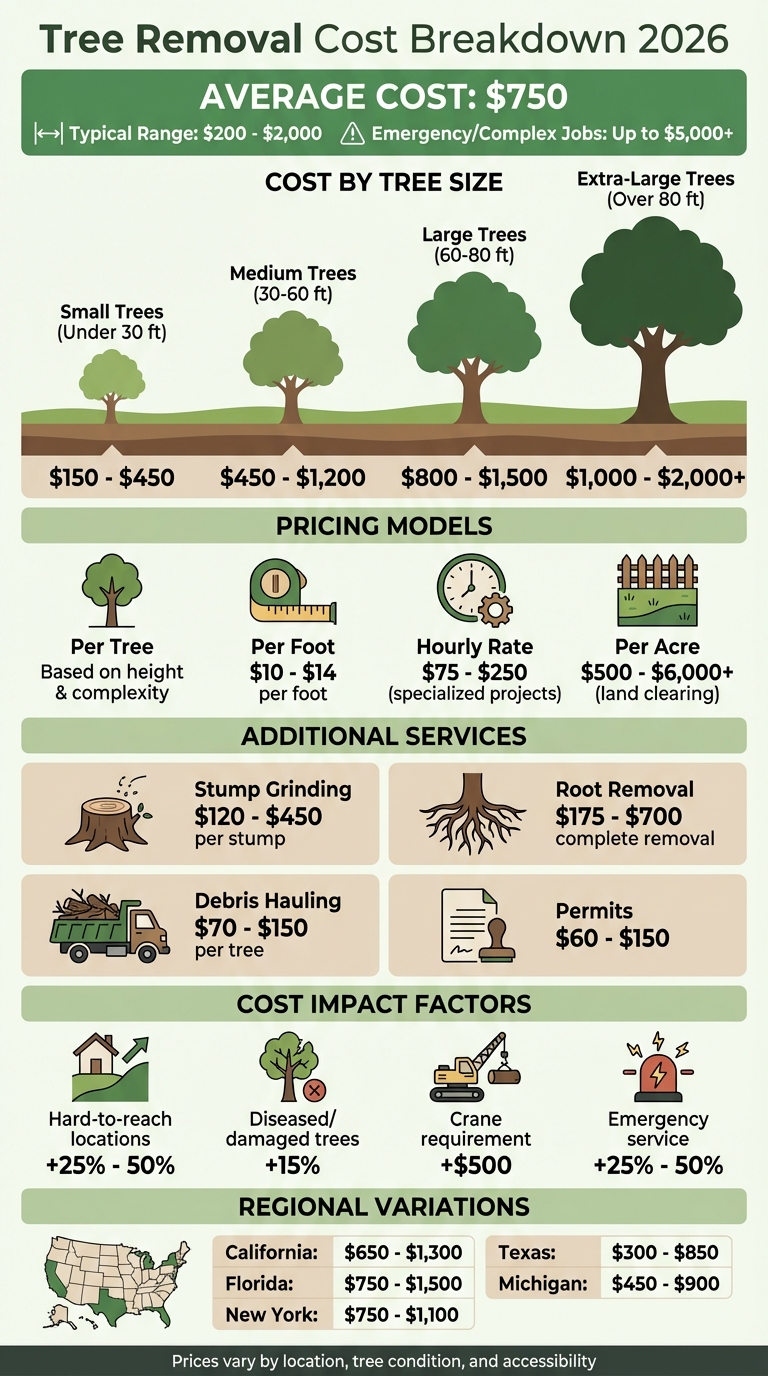
In 2026, the average cost for tree removal services is around $750, with most jobs falling between $385 and $1,070. However, depending on the specifics of the project, costs can range from as low as $200 to as high as $2,000.
For smaller or fallen trees, removal can cost as little as $150, but intricate or challenging jobs – like those involving cranes, emergency services, or trees taller than 80 feet – can exceed $10,000. In cases of emergency, such as storm-related removals, expenses can reach approximately $5,000.
Tree height significantly influences pricing. Here’s a breakdown:
- Small trees (under 30 feet): $150–$450
- Medium trees (30–60 feet): $450–$1,200
- Large trees (60–80 feet): $800–$1,500
- Extra-large trees (over 80 feet): Starting at $1,000, often exceeding $2,000.
How Tree Removal Services Charge
These price ranges depend on how companies calculate their fees. Most tree removal services charge per tree, factoring in height and complexity. Some use a per-foot pricing model, typically $10 to $14 per foot . For specialized or challenging projects, hourly rates range from $75 to $250.
For larger-scale jobs like land clearing, pricing is done per acre. Costs range from $500 to $2,500 for lightly wooded areas and can climb to over $6,000 for densely forested land.
sbb-itb-a61c528
What Affects Tree Removal Costs
Tree Size and Species
The size and type of tree are major factors in determining removal costs. Key elements like tree height, trunk diameter, and wood density significantly influence the labor and equipment required. Taller trees, for instance, involve more effort, specialized tools, and strict safety measures. To give you an idea, removing a 25-foot ornamental maple might cost around $500, while an 80-foot oak could exceed $2,000.
Thicker trunks also add to the workload, as they take longer to cut and handle. In areas like metro Detroit, where hardwoods like oak and maple are common, wood density becomes a big factor. These trees are much heavier and harder to process compared to softwoods like pine, which increases the time and effort needed for sectioning and hauling. Together, these factors establish the baseline cost for tree removal.
Location and Access
The tree’s location is another critical factor in pricing. Where a tree stands determines how easily crews can access it, what equipment they’ll need, and how much care is required to avoid property damage. For example, trees near power lines, homes, or fences often require controlled branch lowering and specialized rigging, which can raise costs by 25% to 50%.
Accessibility is equally important. If a tree is in a backyard without driveway access, crews may have to rely on manual removal methods, which take more time and effort. As Brandon Nelson, Operations Manager at Northern Craft Tree Solutions, notes:
In our line of tree service, labor/technicality typically costs more than materials.
Challenging terrain like steep slopes or tight spaces can also increase labor time for hauling debris. Urban jobs often cost more due to cramped working conditions and obstacles, though rural locations may include travel fees ranging from $50 to $200. Homeowners can lower costs by clearing out yard furniture, ornaments, or even temporarily removing fences before the crew arrives.
Tree Condition and Removal Difficulty
The condition of the tree itself is another variable that impacts removal costs. Dead or diseased trees often come with added risks. Their brittle wood and unstable structure make climbing dangerous, which may require cranes or bucket trucks for dismantling. These tools can add approximately $500 to the base price, and poor tree health might increase overall costs by up to 15% due to extra safety precautions.
Trees that are leaning, hollow, or decayed need complex rigging to control their fall and protect nearby structures. Emergency removals – like storm-damaged trees threatening property – are especially pricey, ranging from $1,475 to $5,000 because of the immediate response required.
On the other hand, removing a fallen tree is much simpler and less expensive. Since there’s no need for climbing or felling, the job typically involves just cutting and hauling, with costs ranging between $75 and $300.
Tree Removal Cost – Ultimate Guide to Saving Money
Extra Costs Beyond Basic Tree Removal
When planning for tree removal in 2026, it’s important to consider additional costs that may arise beyond the base removal price.
Stump Grinding and Root Removal
Removing the stump is usually not included in the basic tree removal service and comes with its own charges. Stump grinding, which grinds the stump 4–6 inches below ground level, typically costs between $120 and $450 per stump. This method is ideal for landscaping but leaves the roots in place.
For complete stump and root removal, expect to pay $175 to $700. Root extraction alone averages $100 to $200 per hour. In Metro Detroit, the typical cost for stump grinding ranges from $121 to $215.
Leaving a stump behind can lead to more than just an eyesore. It can attract pests like termites, create tripping hazards, or even sprout new growth. Addressing these stumps early can prevent future headaches. If you have multiple stumps to remove, bundling the service can save you $50 to $150, with each additional stump costing around $37 to $100. Before grinding, it’s crucial to call 811 to have underground utility lines marked for safety.
Permits and Legal Requirements
Tree removal permits aren’t always mandatory, but many municipalities require them for larger trees – generally those over 10 feet tall or with trunk diameters exceeding 4–6 inches. Permit costs usually range from $60 to $150, but in some areas, they can climb as high as $450 to $800.
In Michigan, the Department of Natural Resources does not provide financial assistance for private tree removal, leaving property owners fully responsible for these costs. However, if a tree poses a risk to power lines, your utility company may handle the trimming or removal at no cost. For trees located on public property – like those between the sidewalk and the curb – contact your city or township instead of hiring a private service.
Some trees, such as heritage trees or species like oak and hickory, may be legally protected. Removing these often requires approval from an arborist, and obtaining a professional arborist report can cost around $860. To avoid fines or legal complications, always check with your local building or planning department before scheduling a removal.
Emergency Services and Debris Cleanup
Emergency situations, such as storm-damaged trees threatening your property or blocking access, often come with higher costs. Emergency removal for smaller trees (under 30 feet) can range from $600 to $1,000, while extra-large trees (over 80 feet) might cost between $2,800 and $5,000 or more.
Debris cleanup is another expense to consider. Services for hauling and chipping debris are typically billed at $50 to $100 per hour, or you might pay a flat fee of $70 to $90 per tree. Wood chipping averages around $145 per hour, and log splitting can add another $50 to $90. If it’s safe and manageable, handling the cleanup yourself could help reduce costs.
Homeowners insurance may provide some financial relief, but it’s limited. Most policies cap tree removal reimbursements at $500 to $1,000 per tree, with total event coverage ranging from $1,000 to $2,500. Keep in mind, insurance typically only covers removal if the tree damages a structure like your house, garage, or fence – not if it simply falls in your yard without causing harm.
Tree Removal Costs by Region
Cost Differences Across the US
Tree removal prices in the United States vary widely, influenced by factors like labor rates, local demand, and logistical challenges. For instance, Northern states typically have higher costs compared to Southern states, largely due to increased demand and higher labor expenses. Urban areas also tend to see steeper prices because of tight workspaces, traffic control needs, and added safety precautions.
If you live in a rural area, you might encounter additional travel fees, which usually range from $50 to $200. Tree service providers often include these charges to account for the extra distance they need to travel to your property. Here’s a look at average costs across several states in 2026:
| State | Average Cost Range |
|---|---|
| California | $650 – $1,300 |
| Florida | $750 – $1,500 |
| New York | $750 – $1,100 |
| Texas | $300 – $850 |
| Michigan | $450 – $900 (medium tree) |
City-specific pricing offers even more variation. For example, New York, NY residents can expect costs between $600 and $1,100, while in Los Angeles, CA, prices range from $550 to $1,000. In Houston, TX, the average is $500 to $900, and St. Paul, MN typically sees rates of $450 to $850.
Metro Detroit Pricing
Looking closer at regional trends, Metro Detroit provides a snapshot of localized pricing. In areas like Oakland and Macomb counties, residential tree removal jobs generally range from $500 to $2,500, with most falling between $1,000 and $1,500. For example, removing a medium-sized maple tree in an open yard typically costs $450 to $900.
"The average tree removal cost in Michigan for a medium maple in an open yard usually ranges from four hundred fifty to nine hundred dollars." – West Bloomfield Tree Service & Removal
Urban areas such as Birmingham, West Bloomfield, and Rochester Hills often require specialized tools like high-reach lifts or compact loaders to navigate tight spaces without damaging property. These areas also face added expenses for traffic control, narrow alleyways, and permit requirements, which can drive up prices.
Timing your tree removal can also impact costs. Scheduling during late winter or early spring is often cheaper because demand is lower, and trees are easier to handle without their leaves. Another way to save is by keeping the wood chips on-site for mulch, which can shave off about $50 per truckload from your bill. If you have multiple trees to remove, bundling them into one job can also reduce the overall cost by spreading equipment mobilization fees across several trees.
Viking Tree & Stump Services
Service Plans and Pricing
Viking Tree & Stump offers a range of services designed to meet the specific needs of metro Detroit. Their offerings are divided into three main tiers: Basic Tree Care, which focuses on essential trimming, pruning, and regular maintenance; Advanced Services, which handle more challenging tasks like hazardous removals, complex extractions, and work near structures or power lines; and Commercial Care, tailored for large-scale projects like clearing and managing multiple trees. This tiered approach ensures they can handle everything from routine upkeep to intricate and high-stakes tree care.
Pricing for these services ranges from $500 to over $3,000, depending on factors like tree species, location, and how accessible the site is. Additional services, such as stump grinding, debris removal, and wood chipping, are included in personalized quotes to ensure clients get exactly what they need.
Benefits of Working with Viking Tree & Stump
Choosing Viking Tree & Stump means working with a team of ISA Certified Arborists who bring specialized knowledge in tree anatomy, root systems, and risk assessment. Their familiarity with local conditions – like the characteristics of regional trees (oaks, maples, evergreens), soil types, and permit requirements in Oakland and Macomb counties – ensures efficient and compliant service. For emergencies, their 24/7 response team is equipped to handle fallen trees that threaten property, helping to prevent further damage.
Safety is a top priority. The team uses advanced rigging techniques and cranes to safely remove tall or hazardous trees while minimizing disruption. Emergency services do come with an added cost – typically 25% to 50% more than standard rates. However, this quick action can save clients from more expensive repairs later. For non-emergency work, scheduling during late winter or early spring can sometimes reduce costs, thanks to lower seasonal rates and easier equipment access.
Conclusion
Tree removal costs in 2026 depend on factors like tree size, accessibility, and condition. On average, homeowners spend about $750, though prices can range from approximately $150 for small trees to $5,000 or more for emergencies or very large removals. Keep in mind additional expenses such as stump grinding ($100–$500), debris hauling ($70–$150), and permits ($60–$150) when planning your budget. These costs emphasize the importance of hiring skilled professionals for the job.
Bringing in a professional ensures safety and reduces liability risks. As Jane Purnell from LawnStarter notes:
For bringing down larger trees, hiring a professional is always worth the investment.
Attempting to remove medium or large trees yourself can result in severe injuries, property damage, or even legal complications. Taking a proactive and informed approach not only ensures safety but also helps you manage costs effectively.
For those in metro Detroit, Viking Tree & Stump offers certified arborists, advanced equipment, and extensive local experience. Their services range from $500 to over $3,000, with 24/7 emergency support available.
To save money, consider bundling multiple tree removals or scheduling during late winter or early spring for potential off-season discounts. Always request at least three detailed quotes to ensure you receive a fair price.
Reach out to Viking Tree & Stump for a personalized quote tailored to your tree’s size, location, and specific challenges. Their team will provide a clear breakdown of costs, helping you budget with confidence. With careful planning and the right professionals, you can tackle your tree removal project efficiently and safely.
FAQs
What are the main factors that determine tree removal costs in 2026?
Several factors will impact the cost of tree removal in 2026. Tree size is a major factor – taller trees, especially those over 60 feet, typically cost more to remove. This is because they require more equipment and labor, with costs sometimes exceeding $1,000.
Location and accessibility are also key. Trees in tough-to-reach spots, near power lines, or on steep slopes may need extra safety precautions, which can drive up the price.
The tree’s condition matters too. Dead or diseased trees might require special care, and certain species – like heritage trees – might involve permits or additional steps. Services like stump grinding, debris removal, or emergency work can further increase the total cost. To avoid unexpected expenses, it’s important to consider all these factors when budgeting.
What are the best ways to save money on tree removal services?
To cut down on tree removal costs, plan ahead and steer clear of emergency services, which tend to come with a higher price tag. Regular upkeep, such as pruning, can address potential problems early and help you avoid expensive removal later on.
Reach out to several local professionals for quotes to find the best deal. Prices can vary based on factors like the tree’s size, its location, and how complicated the removal process is. If you’re dealing with a smaller tree and it’s safe to handle, you might consider tackling it yourself – just ensure it’s allowed in your area. However, when it comes to larger or potentially dangerous trees, it’s best to leave the job to the experts to avoid unnecessary risks.
Don’t forget to account for extra services like stump grinding or clearing away debris, as these can add to your total bill. It’s also worth checking if your homeowner’s insurance covers tree removal or if permits are required in your area. Taking these steps can help you manage costs effectively while ensuring the job is done safely and properly.
Do I need a permit to remove a tree?
In many situations, you’ll need a permit to remove a tree, but the specifics depend on local regulations. Some areas enforce rules based on the tree’s species, size, or location – this is particularly true for protected trees, those near power lines, or ones growing on public property. Permit fees usually fall between $60 and $150.
To steer clear of fines or legal trouble, it’s a smart move to check with your local government or talk to a professional tree removal service. They can guide you through the process and ensure everything is done by the book.